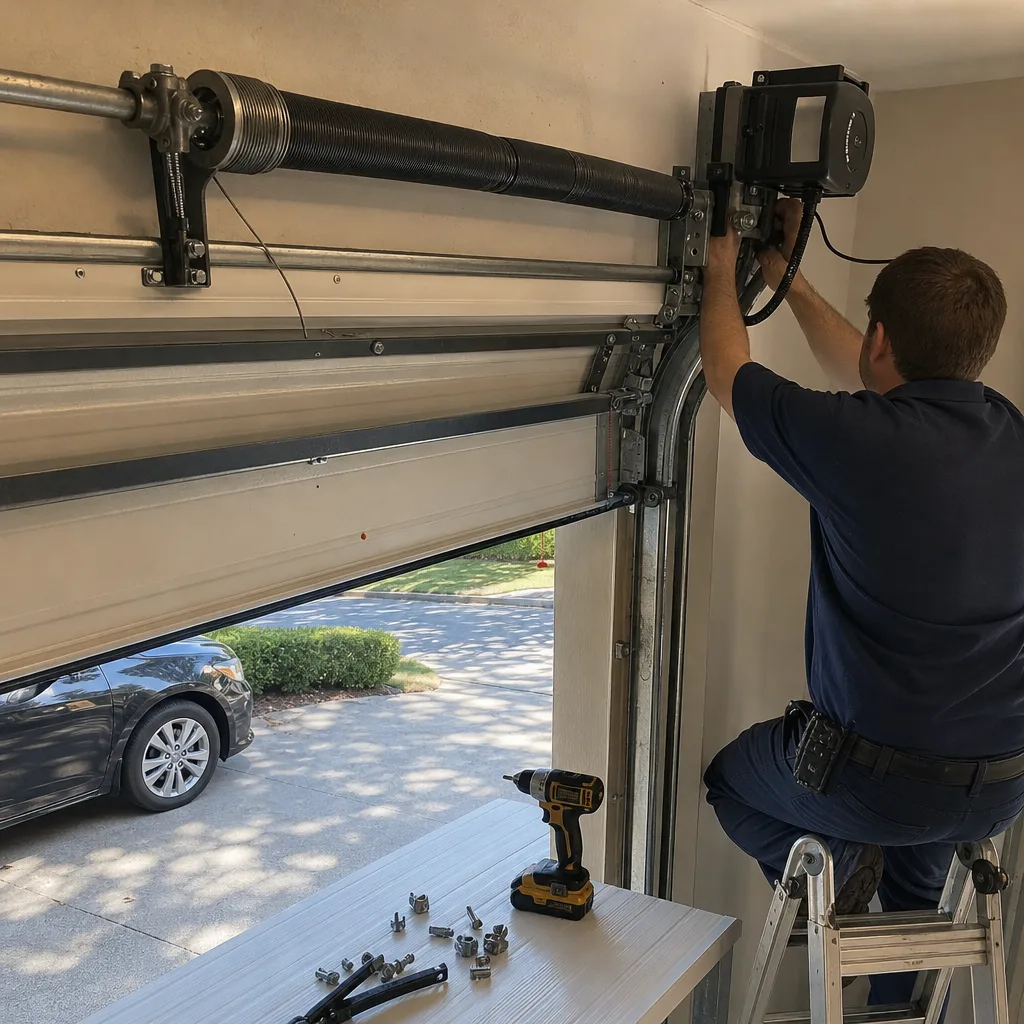
Last updated November 23, 2026
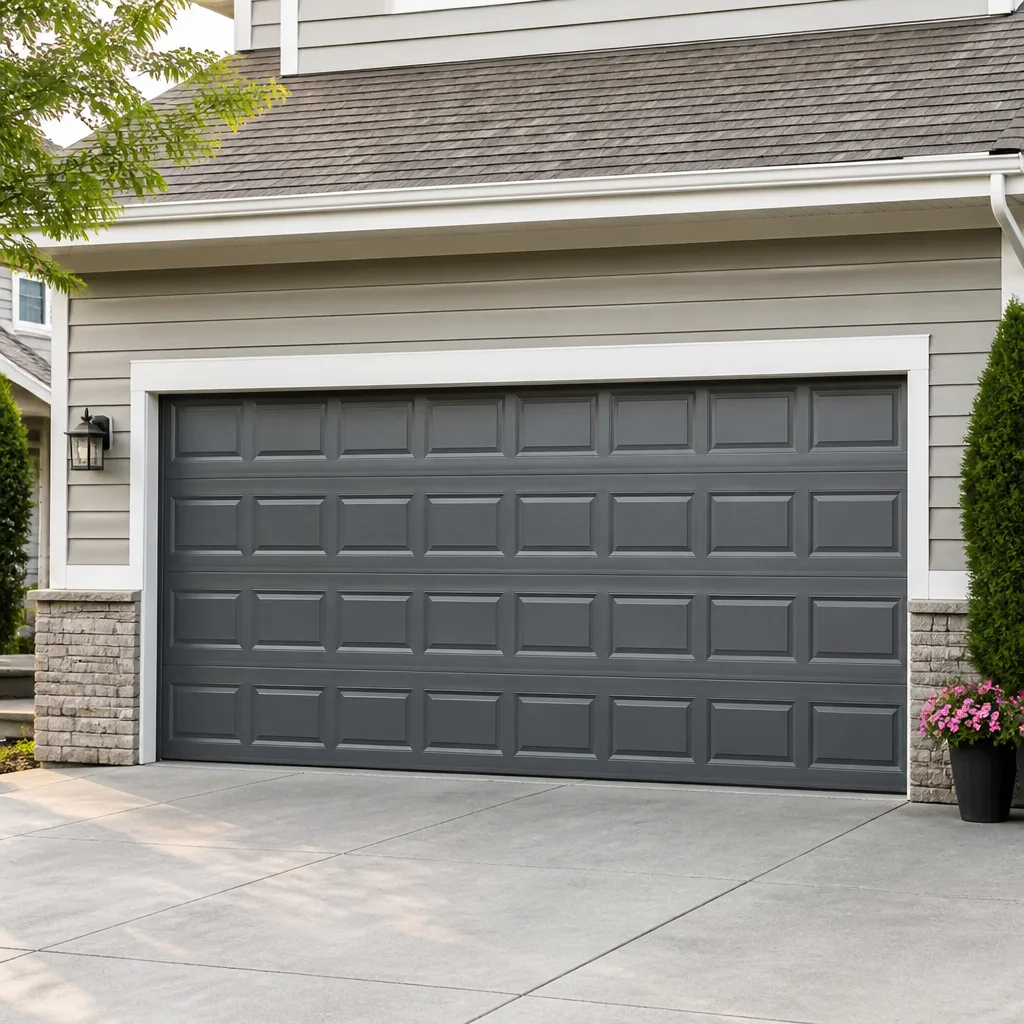 Raised-panel steel
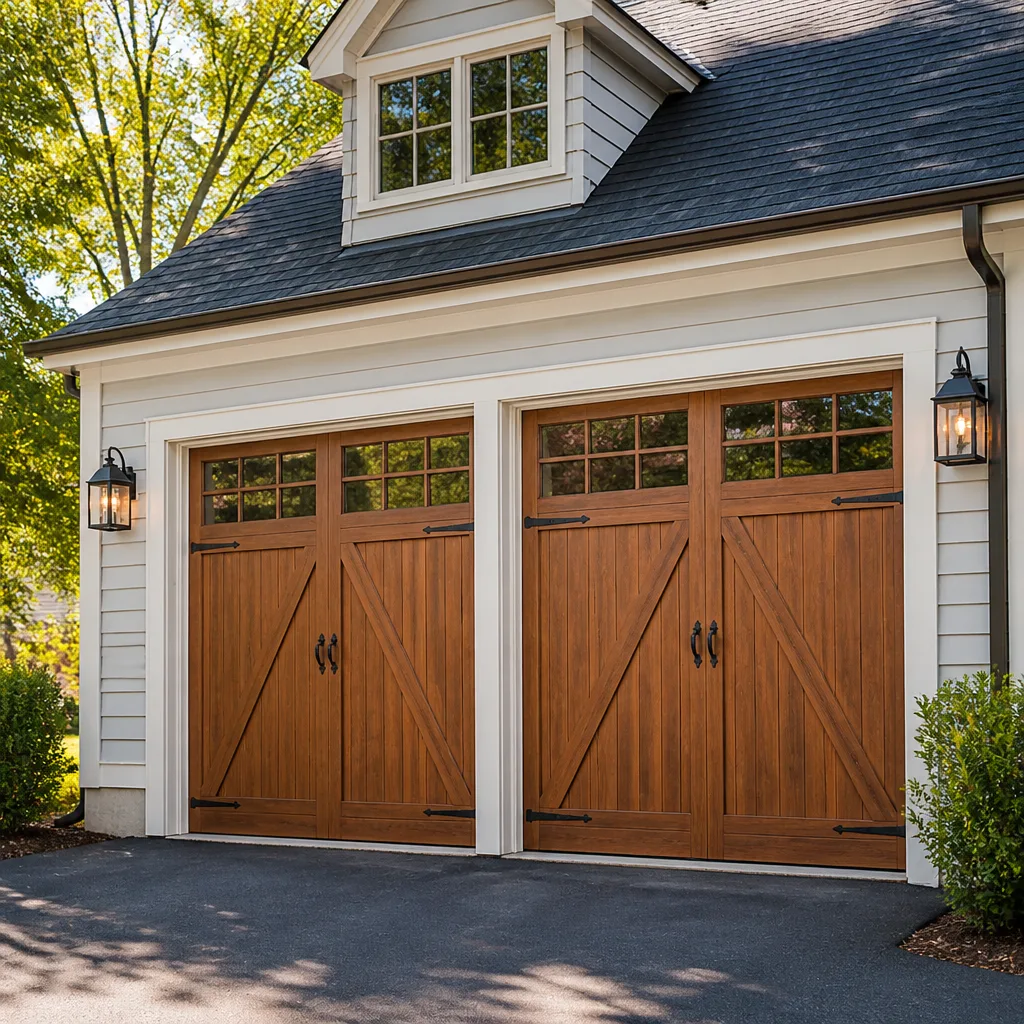 Carriage house
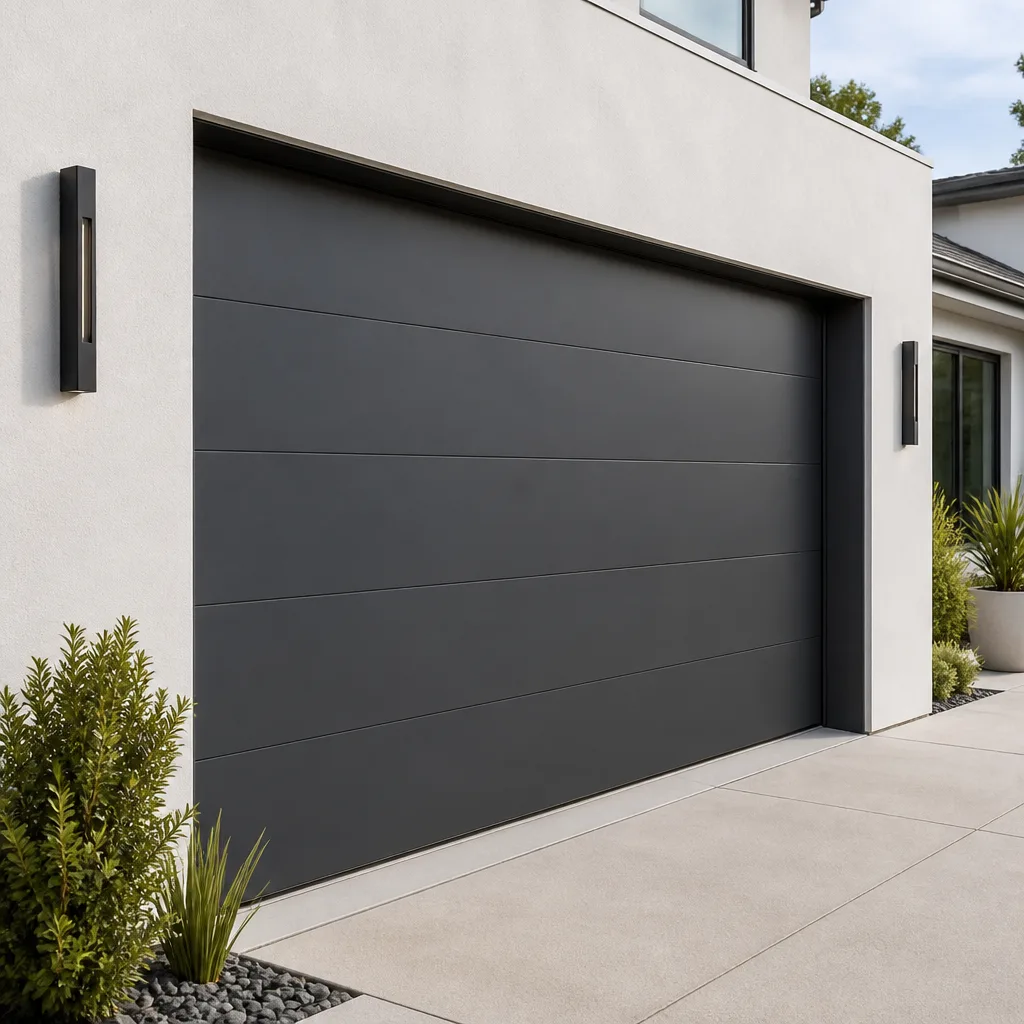 Modern flush
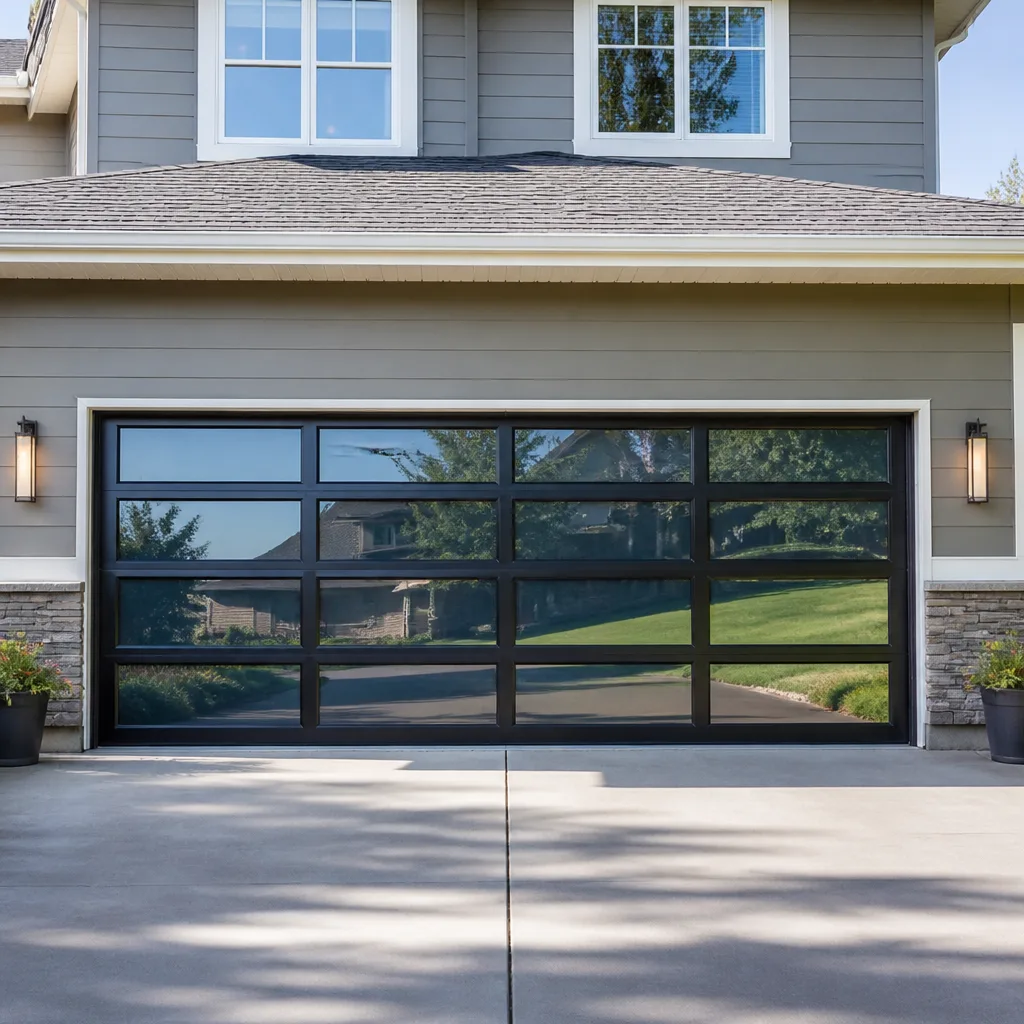 Full-view glass
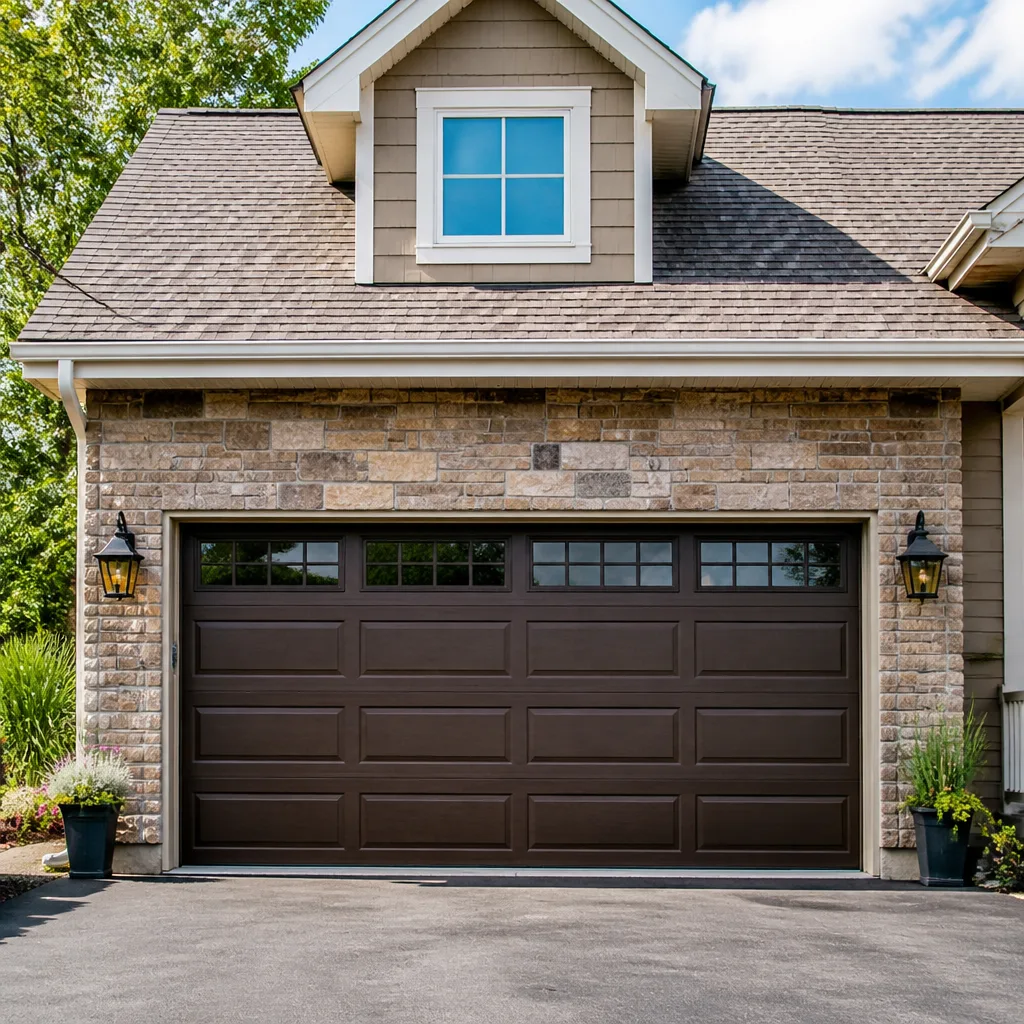 LiftMaster openers
 Chamberlain openers
Full 25-point door and opener safety check with every visit - springs, cables, rollers, tracks, and your LiftMaster or Chamberlain opener included
You get a price before we start. It does not change when the pro arrives.
Get your free estimateSeasonal Garage Door Care for Bethesda: Year-Round Homeowner’s Guide
The garage door springs that snap in January in Bethesda usually started corroding the previous August. High summer humidity is the accelerant; the cold contraction is just the trigger that gets the blame. Most homeowners think of garage door upkeep as a winter job, but in Bethesda the seasons stack up differently. Summer humidity works on the metal and the wood, fall is the lubrication window that protects everything for the next five months, winter tests every setting on your opener, and spring’s freeze-thaw cycle quietly knocks things out of alignment. This guide walks through what actually happens to your door and opener in each season, and how to build a 20-minute walkaround habit that heads off most service calls before they happen.
Quick Answer
Seasonal garage door care in Bethesda means checking one set of components each season: humidity-driven rust and wood swelling in summer, lubrication and weatherstrip condition in fall, opener force settings and spring behavior in winter, and track alignment and floor seals in spring. A 20-minute inspection each season catches the large majority of problems before they turn into a snapped spring or a door that won’t open. When something fails despite the routine, spring repair and opener repair are professional jobs, not weekend projects.
Styles & brands we work with
- Raised-panel steel
- Carriage house
- Modern flush
- Full-view glass
- LiftMaster openers
- Chamberlain openers
Table of Contents
- Why Bethesda’s Four Seasons Stress a Garage Door System
- Summer: Humidity, Panel Seams, and Opener Circuit Boards
- Fall: The Most Important Lubrication Window in the Mid-Atlantic
- Winter: Opener Force Settings and the Cold-Weather Threshold
- Spring: Freeze-Thaw, Bottom Seals, and Tracks Out of Plumb
- The 20-Minute Seasonal Walkaround Habit
- Common Mistakes to Avoid
- Frequently Asked Questions
Why Bethesda’s Four Seasons Stress a Garage Door System
Bethesda sits in a climate band where a garage door faces real temperature swings, real humidity swings, and repeated freeze-thaw cycles. Not enough cold to use ice-road hardware, and not a mild Southern climate where the door essentially sits still. Four distinct seasons means four distinct stress cycles per year, and each one works on a different part of the system. Metal expands and contracts, wood absorbs and releases moisture, rubber seals harden and shrink, and circuit boards inside your opener sit in a damp box in the garage and slowly take on water vapor.
The critical thing to understand is that most door failures stack up across two seasons. A steel panel seam that starts showing surface rust in August is still rusting in November, and when the temperature drops to single digits in January, that thinned metal is more likely to crack. An Amarr or Clopay steel door that stays painted and washed through the summer faces far less risk in winter than one where the panel seams have slowly been drawing moisture without anyone noticing. Same door, same climate, different result based on whether anyone checked.
Bethesda’s older homes in neighborhoods like Chevy Chase, Woodmont, and Battery Park often have wood-frame garage doors or steel doors with wood jamb trim. Those homes face the extra stress of wood movement alongside metal movement. Newer construction in Edgemoor or Maplewood frequently has insulated steel doors paired with smart openers, and there the seasonal concern shifts to opener electronics and weatherstrip adhesion. The right care plan depends on what’s on your garage, which is why the same routine applied blindly doesn’t work for every Bethesda home.
We’ve worked on whatever hardware is already in the garage, from older Wayne Dalton torsion systems to current LiftMaster Wi-Fi openers, and the seasonal pattern holds regardless of brand. The parts wear differently, the timing doesn’t.
Summer: Humidity, Panel Seams, and Opener Circuit Boards
Summer in Bethesda is when the invisible damage happens. Relative humidity climbs through July and August, and the garage, which is often the least ventilated space in the house, holds that moisture overnight. Three components take the hit.
Steel door panel seams
Every steel garage door, whether it’s an Amarr, a Clopay, or a Wayne Dalton, has seams where the panels overlap and where the trim meets the door face. Those seams collect condensation in humid weather. Left alone, condensation sits in the seam and starts surface rust, which lifts paint and lets more moisture in next summer. Checking for rust-colored staining along panel seams once in early August and washing the door face down with a garden hose catches this before it becomes deep corrosion. A touch-up coat on any chips or scratches before fall closes the door to moisture for the next cycle.
Wood door moisture absorption
A wood garage door behaves like a sponge. It swells in summer humidity, which can throw off its alignment in the tracks, and then shrinks in winter, which opens gaps along the panel joints and the bottom edge. Bethesda’s summer humidity is enough to trigger visible swelling on wood doors that haven’t been sealed recently. A fresh coat of exterior-grade stain or paint on a wood door every few years is the difference between a door that moves through the seasons without trouble and one that misaligns twice a year.
Opener circuit board humidity sensitivity
This is the part homeowners miss. The logic board inside a LiftMaster, Chamberlain, Genie, or Craftsman opener lives in a housing mounted to the ceiling of the garage, and that housing is not sealed against humidity. Over multiple summers, moisture vapor slowly works into the board, and the first symptom is usually an opener that acts up intermittently on hot, sticky days: the door reverses without reason, the remote is slow to respond, or the safety sensors act finicky. If your opener has been in service through several Bethesda summers and starts misbehaving in July or August, humidity-damaged electronics are a likely cause and worth inspecting before assuming the motor is failing. That’s a job for a trained technician, since opening an opener housing to check the board is not something to attempt on a live unit.
Fall: The Most Important Lubrication Window in the Mid-Atlantic
If you lubricate your garage door once a year, fall is the window that matters. Everything you lubricate in October is protected through the winter cold and the spring thaw, and it’s still working next summer. Spring lubrication sounds logical but leaves the whole winter unprotected. Summer lubrication burns off faster in the heat.
Which components dry out fastest
In our experience, three parts go from adequate to dry across a Bethesda fall:
- Hinges and roller stems. These see the most metal-on-metal contact on every open and close cycle. A dry hinge is often where a grinding noise starts in November.
- The torsion spring coils (not the spring itself, but the coils and their bearing plates). Lubricating the spring coils is safe and reduces wear. Do not touch the spring any other way, and if a coil looks broken or stretched, stop and call a technician before using the door.
- The opener’s chain or belt drive and the rail. Dry chains on a LiftMaster or Genie opener get loud in cold weather. A light application of the manufacturer’s recommended lubricant on the chain or a check of the belt tension quiets this without needing a service call.
What not to lubricate
Do not oil the tracks. Some homeowners grease the vertical and horizontal tracks thinking it will help, and it makes the door worse: the rollers are designed to travel clean on dry tracks, and grease collects grit that grinds against the rollers over the winter. Wipe the tracks with a dry rag to remove dust and leave them dry. A few drops of silicone spray on the rollers themselves is fine, but the tracks stay clean.
The fall check also covers weatherstrip. Rubber bottom seals harden in cold weather, and if you wait until they’ve already stiffened in December, the seal has already started to take damage. In early fall, press a fingernail into the bottom weatherstrip: if it springs back, it’s fine. If it feels hard or leaves an indent, it’s approaching end of life and worth replacing before winter.
Winter: Opener Force Settings and the Cold-Weather Threshold
Winter is when the door works hardest and the opener works hardest of all. Cold grease in the track, hardened weatherstrip, and slightly contracted metal all add friction that the motor has to overcome. Most residential openers aren’t set up for this, and one January morning the door reverses halfway up or the opener strains audibly and gives up.
The cold-weather threshold
In our experience, most LiftMaster and Genie openers start struggling first on the coldest mornings of the year, when the door itself has lived through a full overnight cold soak. Below about 25 degrees Fahrenheit on the door surface, the combination of stiff grease and contracted metal can push the required opening force just past what the opener is currently set to deliver. The exact threshold varies by opener model, door weight, and whether the door was lubricated the previous fall, but the pattern is consistent: mid-winter mornings are when opener force issues show up.
How to check your opener’s force setting before failure
Opener force limits are set with adjustment dials or programming menus and are best checked by a technician, because both limits and travel positions have to be correct for the door to reverse properly in an emergency. What a homeowner can do safely is watch and listen:
- Run the door up and down once per week through the winter.
- Listen for straining or a change in pitch during the first few feet of travel.
- Watch whether the door reverses on its own before closing fully, or stops partway up.
- Check that the safety sensor LEDs on both sides of the door are solid, not flickering, especially on foggy or snowy mornings.
- If any of the above happens more than once, call a technician to check the force setting and the door balance, not to crank the force limit up. Raising the force limit to “get by” is exactly how a door safety reverses fails.
A technician with the right tools can check door balance, force, and travel limits in one visit, and those adjustments are done with the opener’s specified procedure, not guesswork. Our technicians have up to 12 years of experience with LiftMaster, Chamberlain, Genie, and Craftsman units, and the seasonal force check is a fast one. If the opener needs real repair rather than adjustment, our garage door opener repair service covers it.
Spring safety in winter
Torsion and extension springs are under high tension at all times, and cold weather doesn’t loosen them. If you hear a loud snap from the garage, see a visible gap in a spring coil, or the door suddenly feels much heavier to lift, stop using the door. A broken spring is a safety failure, not a maintenance issue, and springs must be replaced by a trained technician. This is the one part of garage door work we actively discourage homeowners from touching. Our garage door spring repair service is dedicated to spring work, and if the door is stuck open or stuck closed and the car is trapped inside, we offer emergency service for safety- and security-critical failures.
Spring: Freeze-Thaw, Bottom Seals, and Tracks Out of Plumb
Spring in Bethesda is the season of visible aftermath. A hard winter followed by repeated freeze-thaw cycles leaves a garage door slightly different from how it went into winter, and the changes show up as concrete floor seal gaps, weatherstrip lifting, and tracks that have drifted out of plumb.
Freeze-thaw and the bottom seal
The garage floor and the door bottom live through dozens of freeze-thaw cycles through a Bethesda winter. The concrete floor can heave slightly, and the bottom weatherstrip gets pressed hard against a floor surface that’s moving. By the time spring arrives, the seal is often touching unevenly: some sections touch, others have a visible gap. If you can see daylight under any part of the bottom weatherstrip with the door closed, cold air is leaking in. Weatherstrip is one of the few parts a homeowner can inspect and understand easily, and if the gap is consistent, professional replacement is quick.
Why tracks go out of plumb
Cold contraction across metal tracks, combined with a winter of vibration, loosens the lag bolts that hold the tracks to the wall. A track that was perfectly vertical in November can be a degree or two off by March. That small change is enough for the rollers to bind, and the door starts making a scraping noise at a specific section of travel. In spring, run the door fully and watch the gap between the rollers and the track: if the gap changes along the travel or the rollers pull one way, the track needs realignment. This one is a technician job; forcing the track by hand risks damaging the roller mounts.
Spring checks you can do safely
- Walk the perimeter of the door and look for daylight gaps at the bottom and sides with the door closed.
- Look at the spring coils above the door for any gap or break; if you see one, stop using the door.
- Check that the lag bolts supporting the tracks are snug. If the track visibly moves when you press on it, it’s loose and needs professional tightening.
- Listen for scraping during a full open-close cycle. Scraping at one section of travel usually means track misalignment.
The 20-Minute Seasonal Walkaround Habit
The single most effective thing a Bethesda homeowner can do for a garage door is a 20-minute walkaround once per season. In our experience, this routine catches the substantial majority of problems before they require a service call, because most garage door failures announce themselves weeks before they happen. Here’s a walkaround you can do in one pass, in about 20 minutes, with no tools beyond a rag and a flashlight.
- Open and close the door once slowly. Listen for anything new: grinding, squeaking, or a motor that sounds like it’s working harder than usual. Stop and look if you hear something that wasn’t there last season.
- Check the springs. Look at every spring coil from a distance of at least six feet. Any visible gap is a broken or stretched spring. Do not stand under the door or touch the spring with anything.
- Inspect the bottom weatherstrip. With the door closed, look for light between the door bottom and the floor. Press the seal with a fingernail to check whether it’s still soft or has hardened.
- Check panel seams and paint. Run your hand along the seam lines and look for rust staining, chipped paint, or bubbling. On wood doors, look for gaps opening at the panel joints.
- Check the opener. Press the wall button and watch the door complete a full cycle. Then press the safety sensor by hand: the door should reverse immediately. Test the remote from a normal distance. If any of these fail, the opener needs professional service, not a firmware reset.
- Check the tracks. Stand at the side of the door and sight down each track. A straight line means they’re plumb. A visible bend means professional realignment.
- Wipe the tracks and lubricate the hinges. Dry rag on drag tracks. A few drops of lubricant on the hinges and roller stems, only in fall and spring.
That’s the entire routine. One pass, once a season, and you’ll know what your door needs before it tells you by failing.
Common Mistakes to Avoid
- Lubricating the tracks. Homeowners in Bethesda often grease their tracks hoping to quiet a noisy door, and grease collects grit that grinds the rollers through the winter. Wipe tracks clean and dry, and lubricate the hinges and roller stems instead.
- Raising the opener force limit to fix a straining door. If a LiftMaster or Genie opener is straining, the right fix is checking door balance and lubrication, not overriding the force setting. Raising force defeats the door’s safety reverse.
- Ignoring summer rust on panel seams. Bethesda humidity causes surface corrosion that starts as a small stain in August and turns into a panel crack by the following winter. A five-minute check in early August and one coat of touch-up paint prevents it.
- Skipping the fall lubrication window. Fall lubrication protects the door all winter. Spring or summer lubrication leaves the door unprotected for the season it needs the help most.
- Assuming a stuck door means a broken opener. In many cases, the opener is fine and something else has failed: a broken spring, a misaligned track, or a stuck sensor. Guessing wrong means buying an opener you didn’t need.
- Replacing the door when the failure is in the opener, or vice versa. A door that reverses on command isn’t broken; a door that feels heavy is. Understanding which part is failing saves real money across a Bethesda door’s service life.
- Doing your own spring work. Torsion and extension springs are under high tension and will cause serious injury if released improperly. This is a professional-only job, always.
See the difference
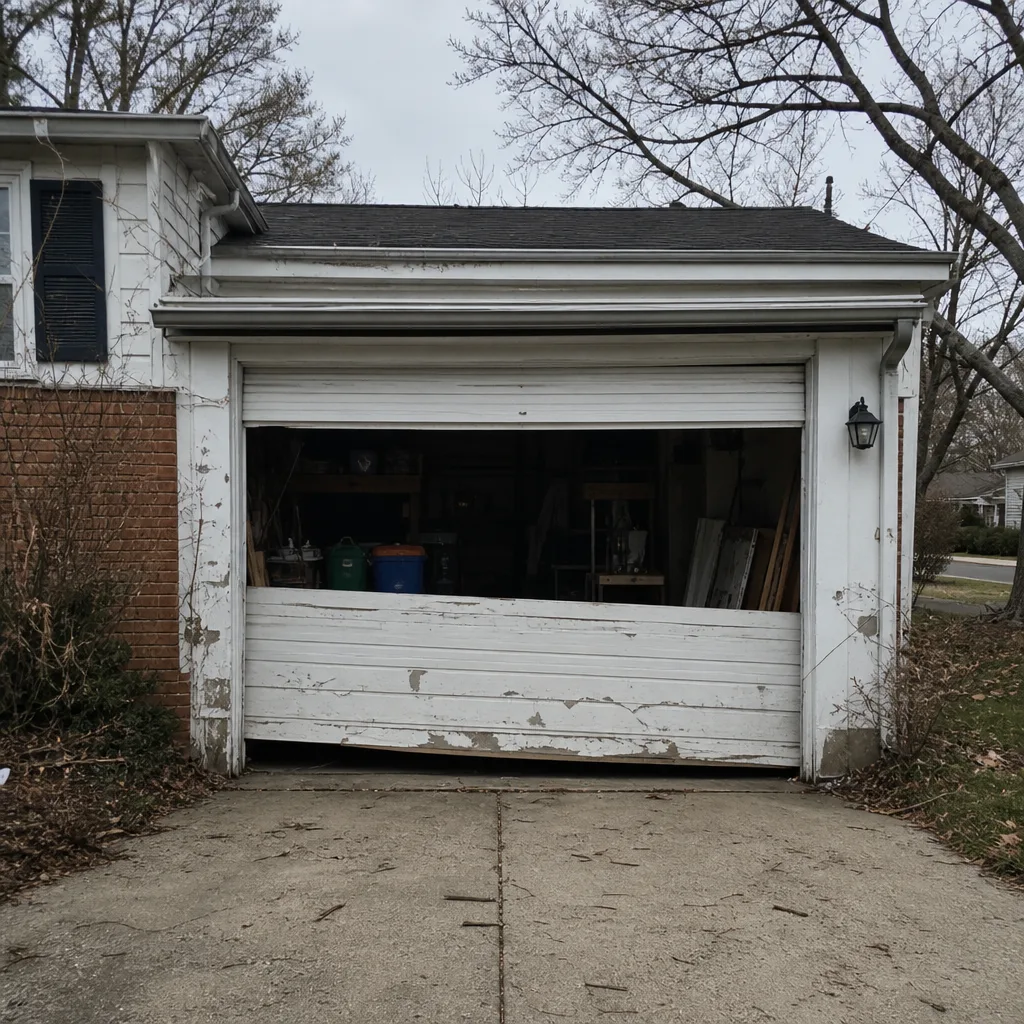 Before
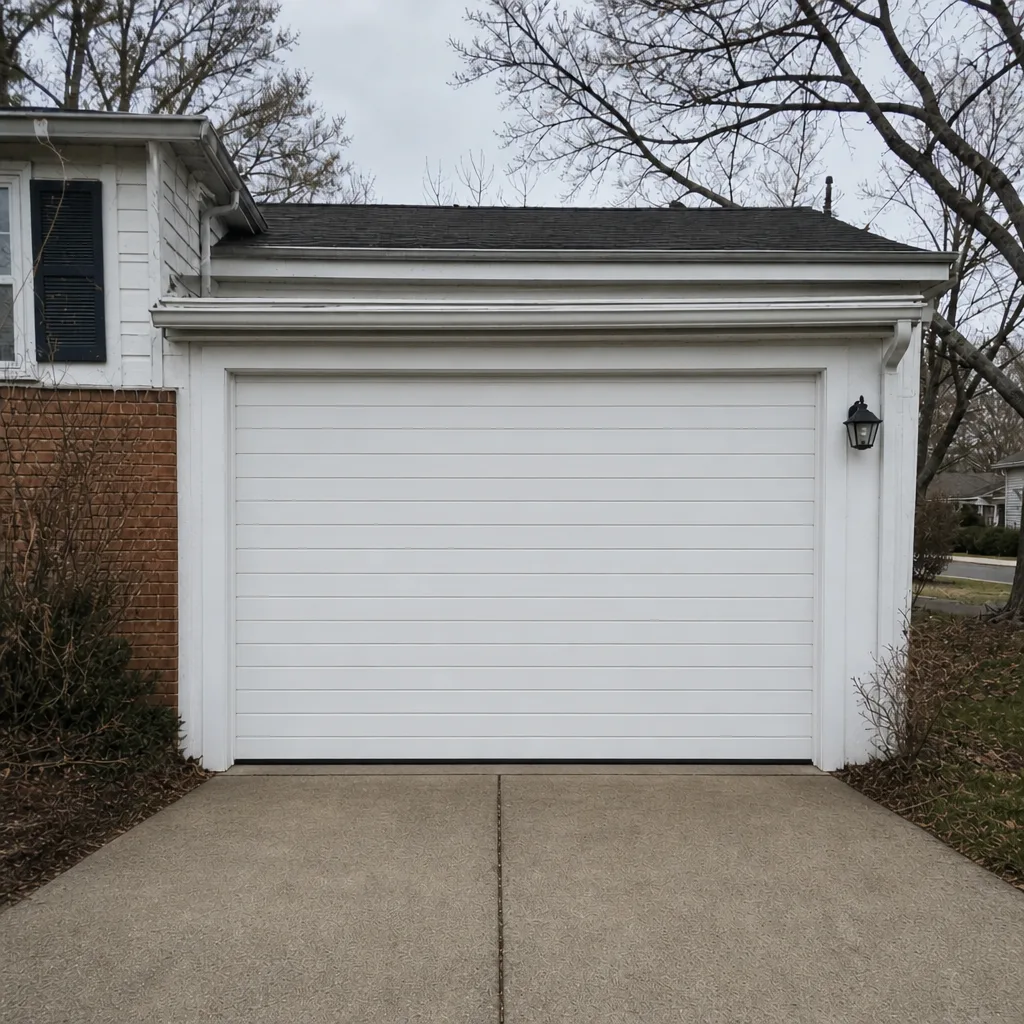 After
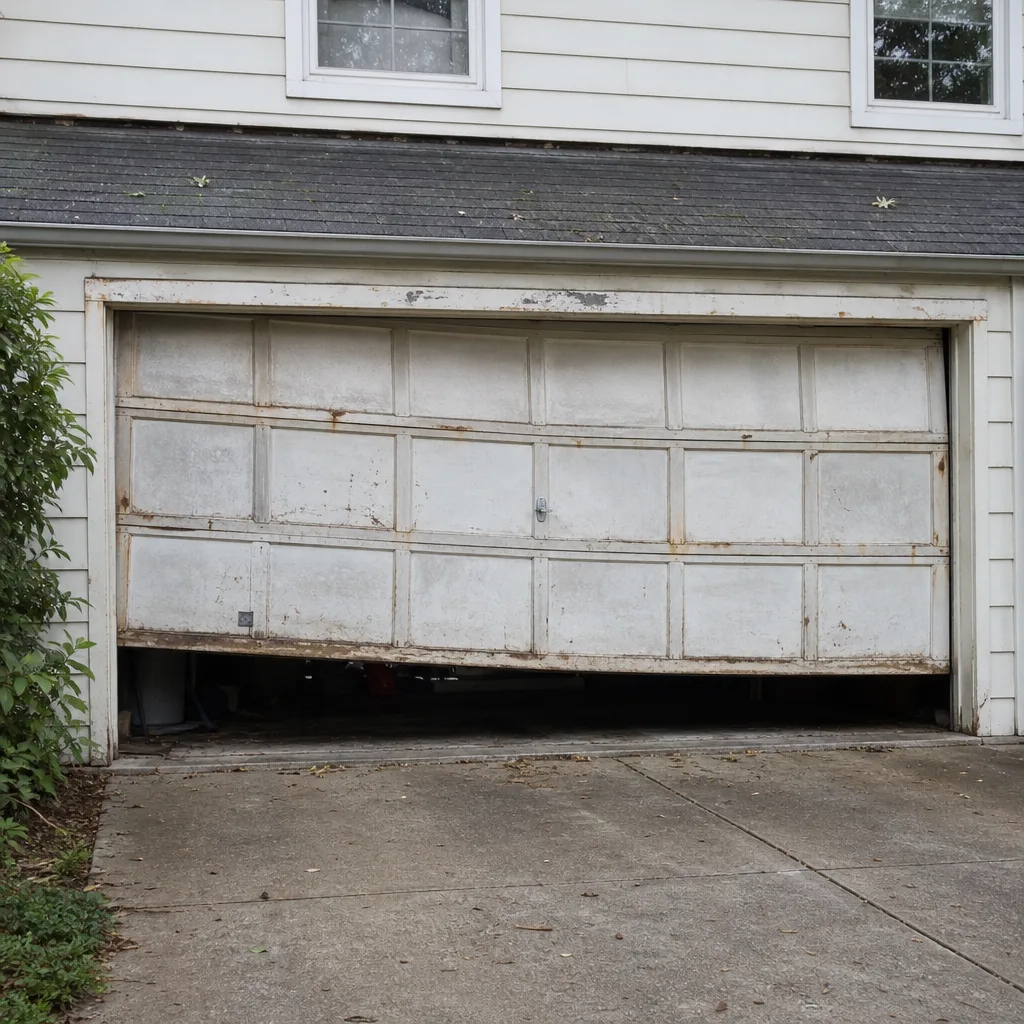 Before
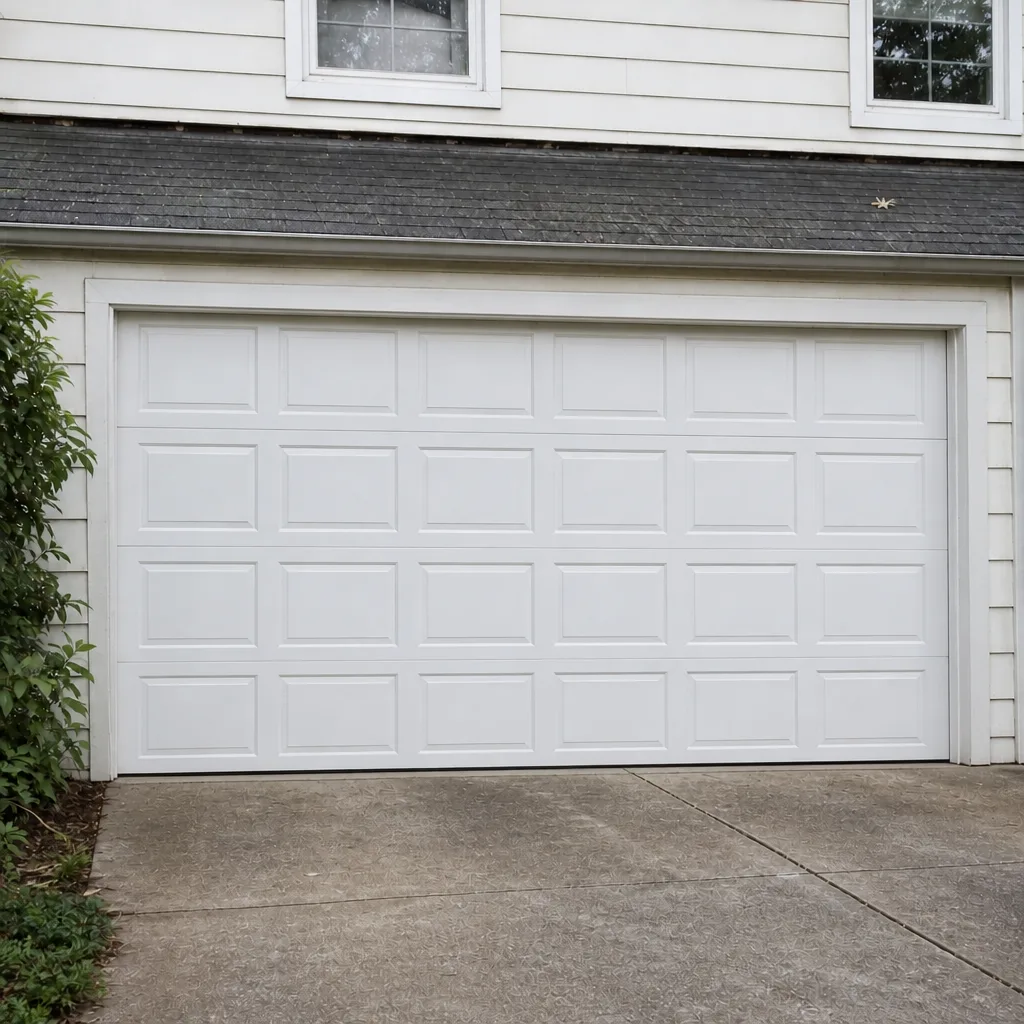 After
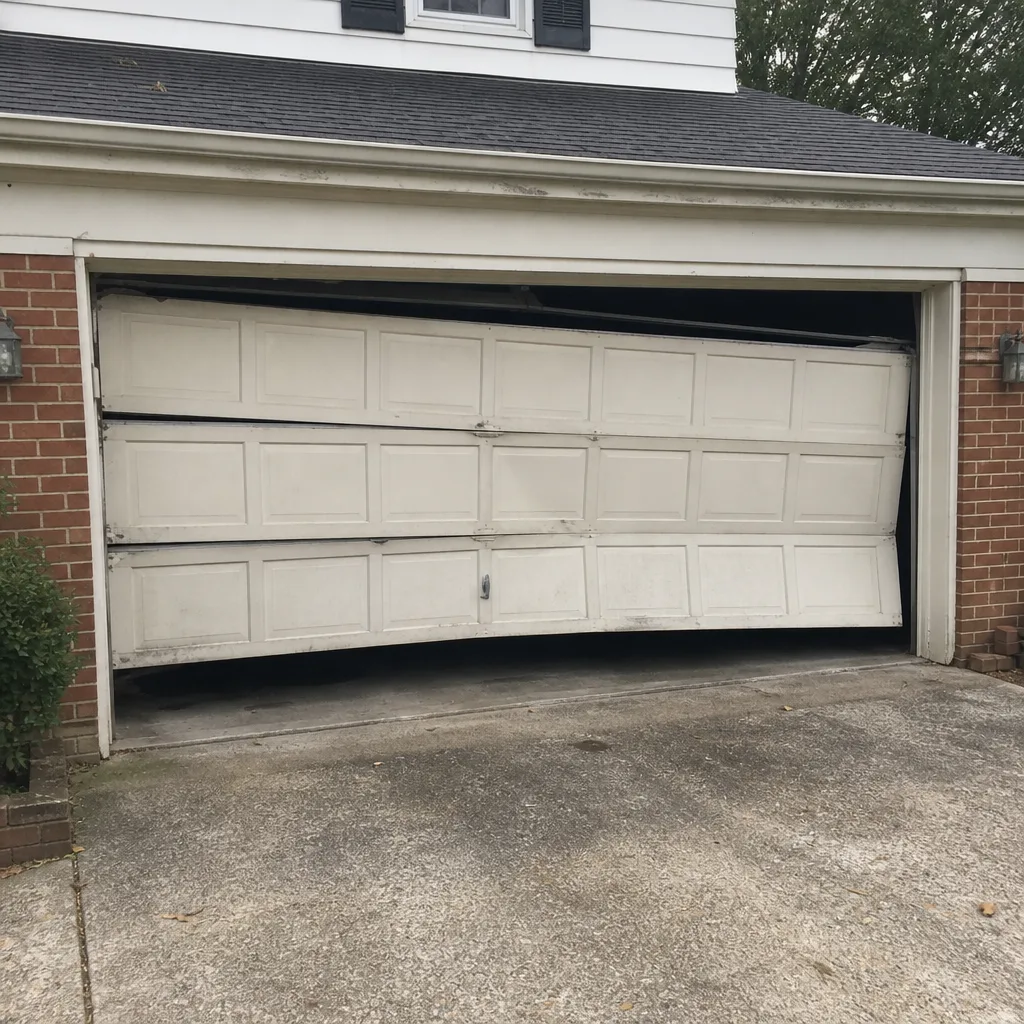 Before
 After
When to Call a Professional
Some failures need a technician on the phone, not a weekend recheck. Call a professional if the door opens only partway up, if you can hear or see a broken spring, if the door is stuck open overnight (a security failure) or stuck closed with the car trapped inside, if the opener reverses on its own or the safety sensor won’t stay solid, or if the door feels much heavier than usual to lift manually. These are not all equal in urgency, but none of them should wait for the next seasonal check. Bethesda Garage Door Repair Co offers free estimates in Bethesda for repair and replacement work, and a written estimate agreed on before work starts means the price doesn’t change once the technician is on site. Call (855) 550-7581 for a free estimate.
Frequently Asked Questions
A garage door should get a 20-minute seasonal walkaround four times a year and a professional tune-up once a year. The seasonal walkaround is a check you can do yourself. The annual tune-up covers balance, force settings, lubrication, and hardware inspection, all of which benefit from a trained eye. If your door is wood or has older hardware, the annual tune-up is worth doing in fall.
Garage door springs often break in winter because of cumulative damage from the previous summer and the cold contraction that stresses them further. High summer humidity accelerates corrosion on spring coils and the surrounding hardware, and the cold months add thermal contraction that completes the failure. The spring hasn’t usually been “fine until winter”; it’s been weakening since August. Call (855) 550-7581 for a free estimate if you suspect a spring problem.
No. Torsion and extension springs are under high tension and require specialized tools and technique to release safely. Working on a spring without the right training and tools risks serious injury. Spring replacement is a dedicated professional service, which is exactly why we handle it as its own service rather than as part of general handyman work. Our garage door spring repair page lays out what’s involved.
Smart openers from LiftMaster, Chamberlain, and Genie do not automatically compensate for door surface temperature or cold grease friction. The force settings are fixed at installation or last adjustment. Cold mornings push the required opening force past what the current setting provides, and the opener strains or reverses. A technician can check the balance and force in one visit and adjust within manufacturer specification. We’ve worked on both legacy Craftsmans and current Wi-Fi openers, and the cold-weather behavior is consistent across brands. Call (855) 550-7581 for a free estimate on a callout.
Summer humidity damage is slow and invisible; winter cold damage is fast and usually obvious. Summer works on panel seams, wood door moisture, and opener circuit boards, and the effects may not show for months. Winter cold works on the same components only after summer has already weakened them: the spring that started rusting in August is the one that snaps in January. Prevention means addressing both windows, and the fall lubrication window is the one that bridges them.
No. Bottom weatherstrip typically lasts several years when it’s kept clean and free of oil and grit. Replace it when you can see daylight under the door with the door closed, when the rubber has hardened or cracked, or when sections of the seal have peeled away. In Bethesda, spring is the natural time to check, because the freeze-thaw cycle is what usually brings the problem to the surface. If you’re not sure whether the seal on your Amarr, Raynor, or Wayne Dalton door needs replacement, ask for a free estimate and a technician can tell you in minutes.
The Bottom Line
Year-round garage door care in Bethesda is about knowing which season stresses which component. Summer humidity accelerates corrosion and wood movement and stresses the opener’s electronics. Fall lubrication protects the door through the whole winter. Winter cold is when opener force settings and spring weaknesses surface. Spring’s freeze-thaw cycle is where tracks, seals, and alignment drift. A 20-minute seasonal walkaround catches most of it. For anything involving springs, opener electronics, or full-door work, a trained technician is the right call, and our team has worked on whatever brand is already in your garage. Ready to get your system tuned up? Call (855) 550-7581 for a free estimate.
For repair and service across Bethesda, start with our Bethesda Garage Door Repair Co home page, or go straight to garage door repair if something has already failed.
Written by the team at Bethesda Garage Door Repair Co.