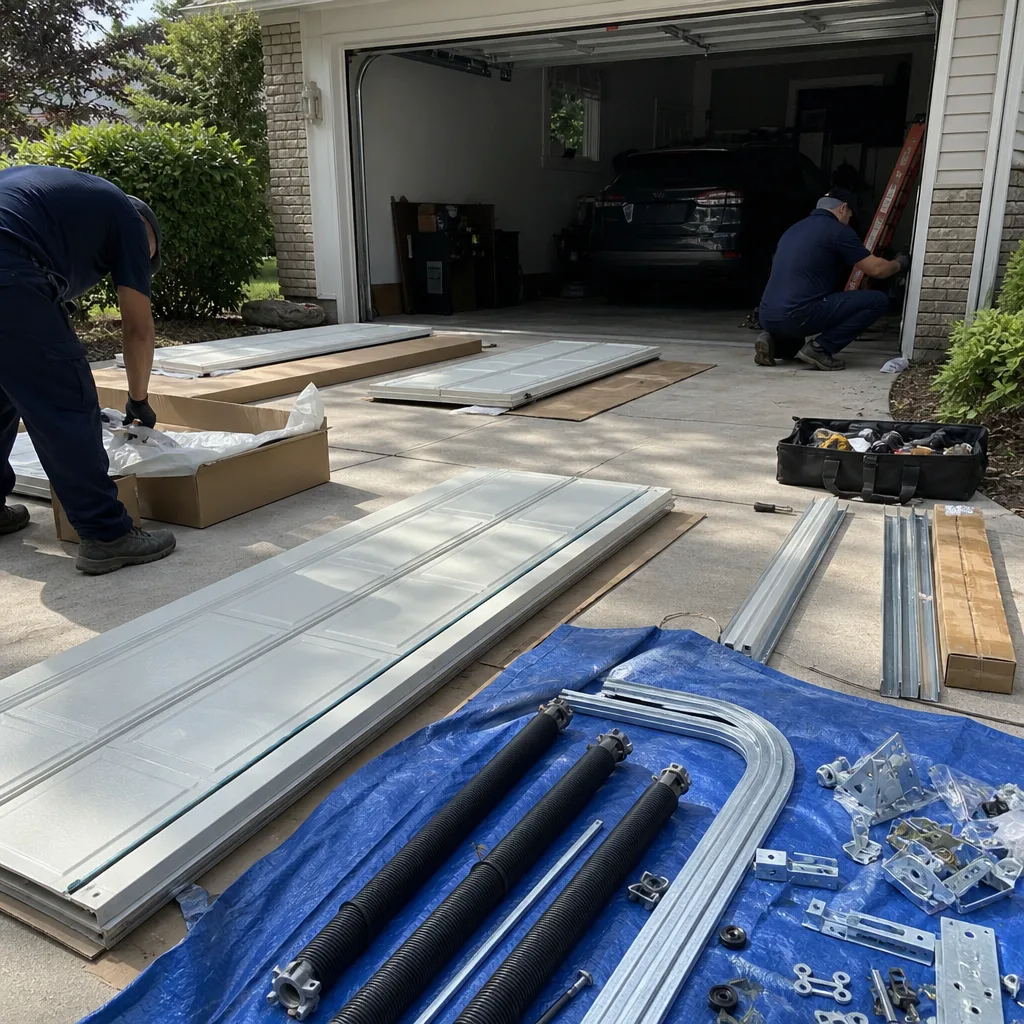
Last updated November 23, 2026
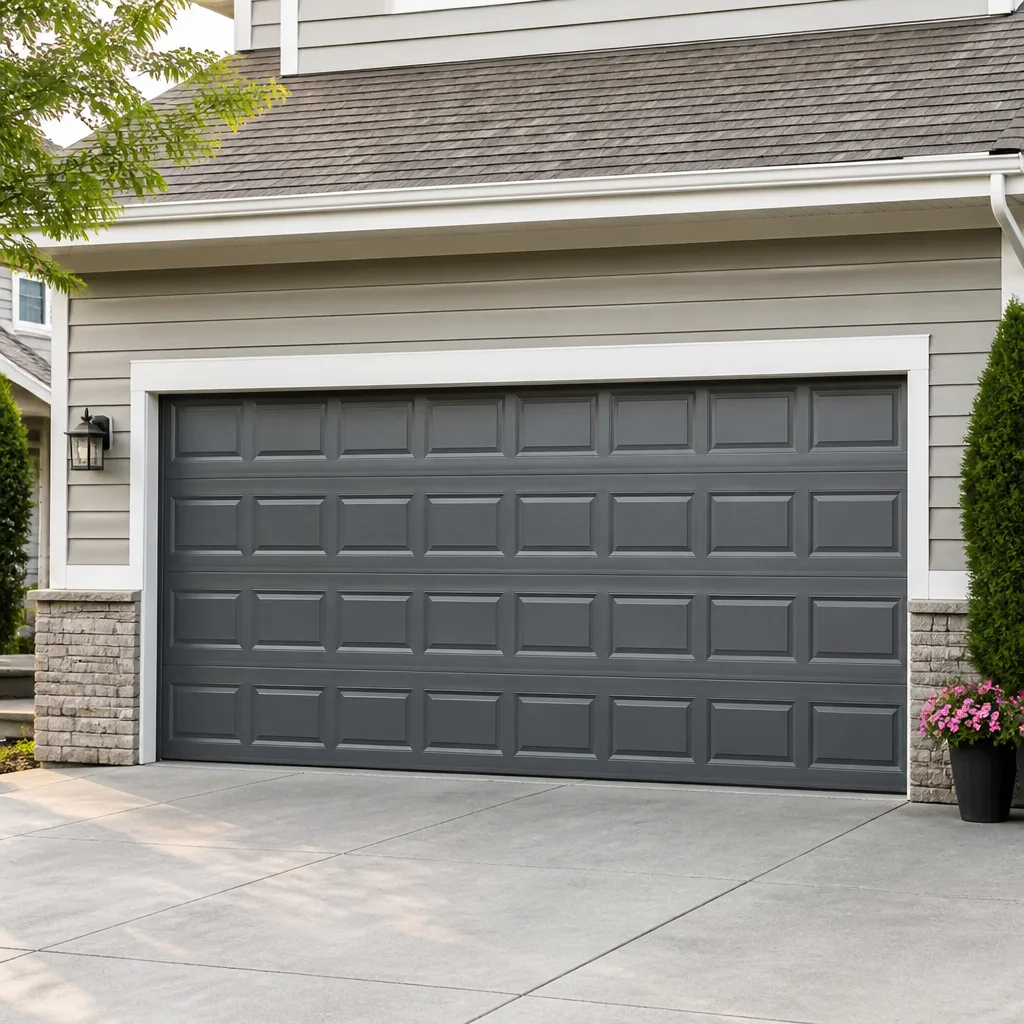 Raised-panel steel
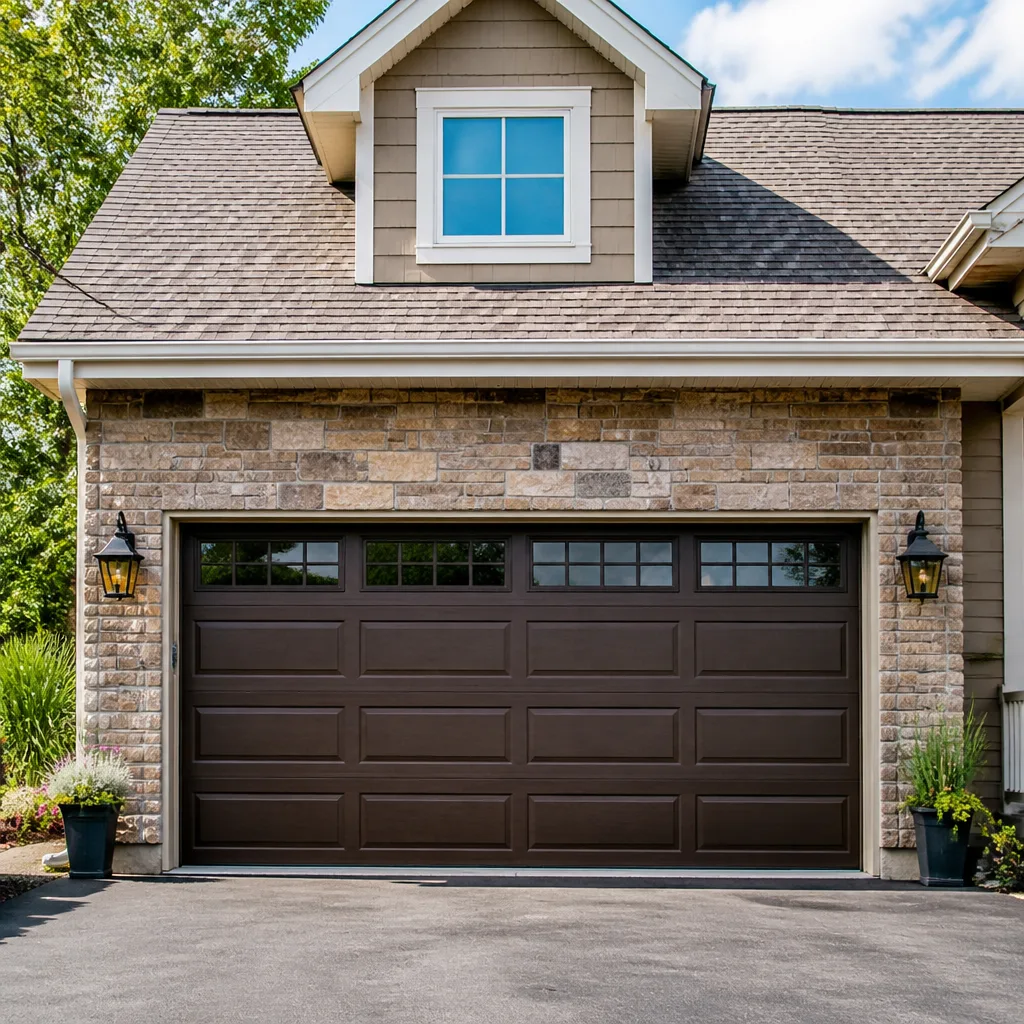
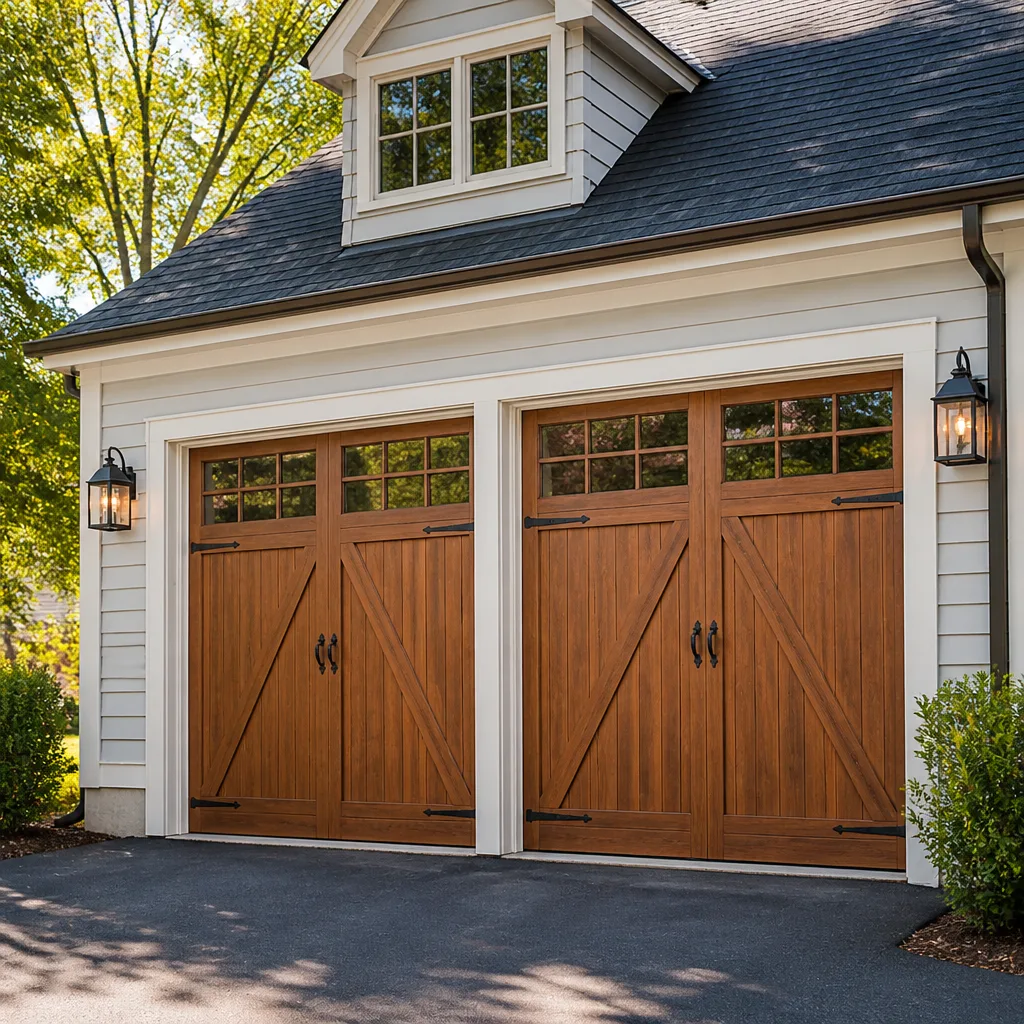 Carriage house
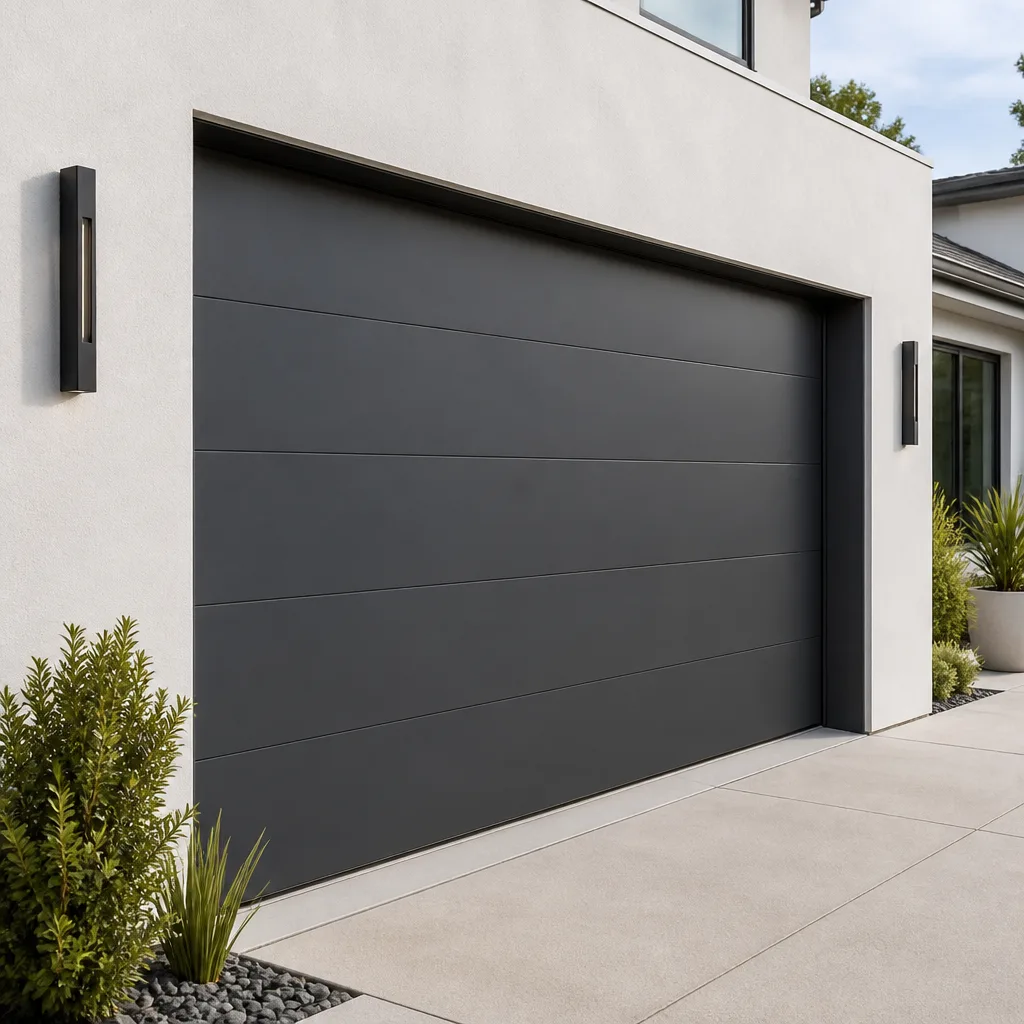 Modern flush
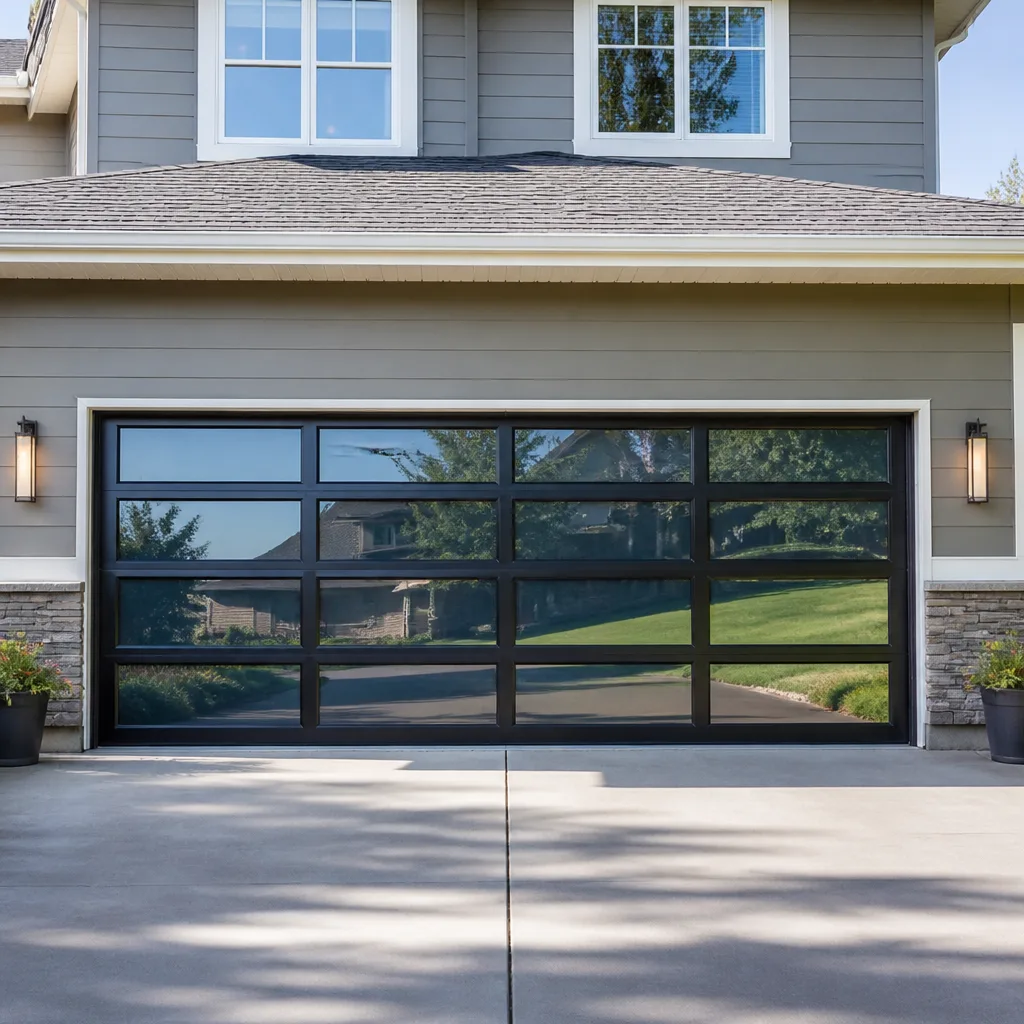 Full-view glass
 LiftMaster openers
 Chamberlain openers
Full 25-point door and opener safety check with every visit - springs, cables, rollers, tracks, and your LiftMaster or Chamberlain opener included
You get a price before we start. It does not change when the pro arrives.
Get your free estimateGarage Door Emergency Preparedness Guide for Bethesda Homes
Most Bethesda homeowners assume a garage door emergency means a snapped spring. In our experience, the calls that come in during the worst weather are usually more ordinary and more frustrating: an opener that can’t haul a door frozen to its threshold seal, a power outage that strands a car inside, or a door stuck open while wind and rain push into the garage. The events that knock out power and freeze the ground are the same events that make a working garage door matter most. This guide walks through the actual failure modes we see around Bethesda, the manual release step nearly everyone gets wrong, battery backup compatibility across LiftMaster and Chamberlain units, how to secure a door safely when a cable or spring lets go, and what to have ready before you call for help.
Quick Answer
A garage door emergency in Bethesda usually comes down to one of four failures: the door won’t open because it’s frozen or the opener has no power, a spring or cable has broken, the door is stuck open and the house is exposed, or the opener has quit with a car trapped inside. The right response depends on which one you’re facing, and the single most important skill is using the manual release cord correctly so you don’t damage the trolley carriage. When the problem involves a spring or cable, stop and call a professional – those parts hold dangerous tension.
Styles & brands we work with
- Raised-panel steel
- Carriage house
- Modern flush
- Full-view glass
- LiftMaster openers
- Chamberlain openers
Table of Contents
- Why Bethesda Winters Are the Real Test
- How to Use the Manual Release Cord Correctly
- Breaking a Door Free From a Frozen Threshold Seal
- Battery Backup Openers: What Works and What Doesn’t
- Securing a Door Stuck Open After a Cable or Spring Failure
- What to Do During a Power Outage
- What to Have Ready Before You Call
- Building a Seasonal Readiness Routine
Why Bethesda Winters Are the Real Test
Bethesda sits in a pocket of Montgomery County where winter weather swings hard. A stretch of mild days thaws snowmelt into the garage apron, then a cold front drops overnight temperatures below freezing and welds the bottom rubber to the concrete. Ice storms coat the door panels and load the springs with extra weight the opener never expected to lift. Add the occasional high-wind event and you have three stressors hitting the same piece of equipment within a single season.
The failure pattern follows the weather. When a cold snap lands after a wet stretch, we hear about doors that won’t budge at the start of the morning. When an ice storm knocks out power across neighborhoods like Battery Park or Westmoreland Hills, we hear about openers that are fine but have nothing to run on. When wind drives a door that’s already been left open, we hear about bent tracks and panels pulled out of their hinges.
What makes this a readiness problem rather than a repair problem is that all three failures are predictable. You know winter is coming. You know the power grid in this part of the county goes down during serious storms. What most homeowners don’t do is test the systems that matter before the weather arrives.
- The seal: a hardened or cracked threshold seal turns into a bond when it freezes. A pliable seal releases more cleanly.
- The springs: torsion springs carry the door’s weight. Cold makes metal brittle, and a spring near the end of its life is more likely to fail on the coldest morning of the year.
- The opener: a unit that’s struggling during mild weather will struggle more when it’s fighting a frozen seal and cold grease.
- The power: a door without a battery backup is a door that stops working when the block goes dark.
Our technicians have up to 12 years of experience and have seen how these failures play out across Bethesda’s housing stock, from older homes with original wood doors to newer construction with insulated steel and smart openers. If you want a professional assessment before winter, garage door repair visits are a sensible way to catch a worn spring or a failing seal in October instead of January.
How to Use the Manual Release Cord Correctly
The manual release cord is the red handle that hangs from the trolley carriage, and it’s the piece of equipment nearly every homeowner mishandles during the first power outage. The cord detaches the door from the opener so you can lift it by hand. Done wrong, it leaves the carriage in the wrong position, the door out of balance with the opener, and the next time power comes back the opener yanks against a jammed trolley and damages the rail or the carriage itself.
Here’s the sequence that works:
- Close the door first if the opener still has power. Pulling the release with the door partly open under tension can let it slam.
- Pull straight down, firmly and once. The carriage should click and detach. A second yank doesn’t help and can bend the release arm.
- Lift the door slowly by hand to confirm it’s balanced. A door that feels much heavier than usual is a sign the springs are tired.
- When power returns, re-engage the carriage by hand – not by running the opener. Pull the door toward the closed position until the carriage clicks back onto the trolley.
- Test the opener through one full open-and-close cycle at reduced speed before trusting it to lift the door under normal load.
Two things go wrong most often. Homeowners pull the cord while the door is halfway up, which stresses the carriage under load. And they re-engage by pressing the wall button, which forces the opener to hunt for the carriage and can shear the trolley gear in a LiftMaster or Chamberlain unit. On a Genie or Craftsman opener, the same mistake often strips the carriage assembly and leaves you with a door that runs but doesn’t move.
One safety note: the manual release only detaches the opener. It does not make the springs safe. If you see a broken spring lying loose or hear a cable flapping, do not lift the door by hand at all – the door is now unsupported and could fall. That’s a job for a professional, and garage door spring repair is a specialized service for exactly this reason.
Breaking a Door Free From a Frozen Threshold Seal
A door frozen to its threshold seal is the most common winter emergency in Bethesda, and the way you free it decides whether you spend the morning with a working door or a bent bottom panel. The fix is gentle and unhurried: warm the seal, break the bond, and confirm the door moves freely before running the opener.
Work through it like this:
- Don’t press the wall button repeatedly. Each attempt strains the opener motor and the trolley, and if you’re on an older Genie or Chamberlain unit it can burn out the gear.
- Warm the seal with a hair dryer on low, sweeping along the bottom of the door where the rubber meets concrete. A space heater pointed at the door for a few minutes works too, but keep it well away from any flammable material.
- Work a plastic scraper or the edge of a credit card under the rubber after the seal softens. Never use a metal tool near the bottom panel – one slip creases the steel and you’ll be replacing the door.
- Lift the door by hand with the manual release engaged once the seal breaks free. If it lifts smoothly, re-engage and run the opener through one full cycle.
- Treat the seal afterward. A silicone-based lubricant on the rubber helps it release next time. If the seal is flat, cracked, or hardened, replace it before the next firm freeze.
One detail that matters in Bethesda: the freeze usually happens after a warm spell melts snow into the door gap, then a cold front drops overnight temperatures fast. Heat first, then break the seal, then move the door by hand – in that order. Rush it with the opener and you trade a five-minute thaw for a bent panel or a stripped gear. If the door still won’t release after warming, there’s likely ice packed deeper in the track, and that’s a case for a technician rather than more force.
Battery Backup Openers: What Works and What Doesn’t
Battery backup is the single most valuable feature a Bethesda homeowner can add to a garage door system, and the good news is that many modern LiftMaster and Chamberlain openers include it natively. Both brands sell units with an integrated backup battery that lifts the door a limited number of times during a power outage, typically enough to get a car out and back in once or twice before it needs recharging. The unit isn’t intended for unlimited use, but for the pattern most homeowners actually face – one outage, one trip out, one trip back in – it does the job.
What many homeowners don’t realize is that the backup isn’t universal. Older openers from either brand usually don’t have it unless it was added. Some builders install base-model units that skip the battery entirely, and those need a compatible add-on battery or a replacement opener. Genie and Craftsman units vary widely by model year: some include backup, many don’t. Raynor and Wayne Dalton systems are similarly mixed. What you want to check is whether the opener head has a battery compartment or a dedicated port for a backup pack, and whether the manufacturer sells a matching add-on.
A short comparison for reference:
- Modern LiftMaster and Chamberlain units: many ship with integrated battery backup. Check the model number on the opener head or the inside of the wall panel.
- Older units from any brand: usually no backup unless an add-on was installed. The compatible battery pack is specific to the model.
- New construction: often the base opener was specified rather than the upgraded unit. Ask before you buy, or check the model number.
- Smart openers: a Wi-Fi-enabled unit with a battery backup lets you monitor the door and open it remotely after a storm, which is genuinely useful when you’re away from home.
If you’re shopping for a new opener, the install and backup compatibility are part of the same decision. garage door opener repair and replacement both come up during a pre-winter check, and it’s the right moment to confirm your unit will actually work when the block goes dark. If you’re not sure what you have, the model number on the opener head is the fastest way to find out.
Securing a Door Stuck Open After a Cable or Spring Failure
When a cable snaps or a spring breaks with the door in the open position, your first job is to secure the door, not to get it down. Do not pull the manual release cord, and do not try to close the door by force. A door in the open position with a failed spring is unsupported at the top; the springs are what hold the door’s weight, and without them the door is essentially a heavy panel sitting on a bent track. Bungee cords are the wrong tool – they stretch under the door’s weight, they give out unpredictably, and one end can snap back with serious force.
The safer temporary method is to brace the door from the ground:
- Keep the door in the open position and confirm nothing is moving. If the door is already sagging or the track is bent, stop and don’t touch it.
- Slide a pair of sturdy sawhorses or tall ladders under the door’s lower edge, positioned under the horizontal rails, to take the weight off the track.
- If you have a low-clearance brace or a cut 2×4, wedge it vertically under the door’s bottom edge against the floor as a backup.
- Close the gap at the top of the doorway – from the outside, work a tarp or heavy blanket over the open doorway and secure it to the frame so wind and rain don’t drive into the garage.
- Leave a note on the interior door so no one in the household tries to close the garage door from the inside.
What makes this a professional call rather than a homeowner fix is the tension in the remaining spring and any slack cable under the door. Slack cable that pulls free can whip with enough force to break a bone. A broken torsion spring still carries stored tension in the unbroken coil. Neither problem is safe to handle without proper tools, and we don’t recommend attempting it. This is the scenario where an emergency call is worth making: a door stuck open overnight in a Bethesda neighborhood is a security concern, and the door has to be braced or lowered by someone who knows how to manage the load. If you’re in that situation, Bethesda Garage Door Repair Co provides emergency garage door service for exactly this kind of urgent failure.
What to Do During a Power Outage
A power outage in Bethesda usually follows the same pattern: the storm hits, the lights go out, and within an hour someone tries the garage door and finds it won’t move. What you do in the first fifteen minutes decides whether the outage is a minor inconvenience or a door that won’t close properly when the power comes back.
Work through this order:
- Confirm the door is actually closed and locked. A closed door stays closed during an outage unless someone pulls the release. Leave it alone.
- If the door is open and the car is inside, use the manual release cord correctly (see the section above) and lift the door by hand. Take it slowly, and have someone else watch the door’s balance.
- If the car is outside and the door is closed, don’t force it. The door is doing its job. Wait for power to return or use the release carefully if you need to get in.
- Keep the garage door closed during the outage where possible. An open door is a security gap, and wind-driven rain gets into the garage fast.
- When power returns, re-engage the carriage by hand and test one full cycle before trusting the opener.
If your opener has battery backup, the door will operate on the backup pack for a short window – enough for one trip out and one trip back in. Watch for the opener to slow down or beep as the battery drains; that’s your cue to treat the door as manual from then on. If you don’t have battery backup on a modern LiftMaster or Chamberlain unit, adding it before next winter is the single highest-value upgrade we can recommend. What you shouldn’t do during an outage is keep pressing the wall button hoping for a different result – the opener is off, and repeated attempts drain the backup battery faster.
What to Have Ready Before You Call
The single best preparedness step you can take is saving the number of a 24-hour Bethesda-area technician before you need one, so a power outage doesn’t turn into a search-and-scramble at 2am. Prepare a short note with the information that matters and keep it on your phone or on a card taped inside the garage.
Here’s what to have ready:
- The opener model number. It’s on the back of the opener head or inside the wall panel. This tells the technician which brand they’re working on and whether backup compatibility is even an option.
- The door type and approximate weight. A single-car door weighs less than a double, and wood doors weigh more than steel or aluminum. You don’t need an exact figure – “double-wide, insulated steel” is enough to start.
- Whether the door is open, closed, or stuck. This changes how the job is approached and whether it’s an emergency call or a scheduled one.
- What you’ve already done. If you’ve tried the manual release, warmed the seal, or replaced a battery, say so. It saves the technician time on the visit.
- The address and gate or access code if applicable. Some Bethesda properties have gates or tricky driveway approaches that slow down arrival.
For a free estimate or an urgent call, our line is (855) 550-7581. Have the model number and a rough description of the door ready, and the conversation will go much faster. If it’s a spring or cable failure, mention that first – it changes the urgency and the way the technician prepares. For a scheduled visit, garage door repair covers the diagnosis and the fix in one trip. If you need a full replacement after a bad break, garage door installation is a separate, scheduled job with a written quote and a measure before anything is ordered. Either way, the price is quoted and agreed before work starts, so the estimate you get on the call is what you’ll see on the invoice.
Building a Seasonal Readiness Routine
Preparedness is mostly a matter of checking a handful of things at the right time of year. A short routine in late fall and again in early spring catches the failures before the weather turns them into emergencies, and it’s the kind of work that pays back in avoided 2am calls.
Put these on the calendar:
- Late October: check the seal. Run a hand along the bottom rubber. If it’s stiff, cracked, or flat, replace it before the first freeze. A pliable seal is the single best defense against a frozen door.
- Late October: test the door’s balance. With the opener disengaged, lift the door halfway and let go. It should hold that position. A door that drifts down has tired springs.
- November: check the opener. Press the wall button and listen for grinding or sluggish motion. A straining opener in November is a dead opener in January.
- November: confirm battery backup. If your opener has backup, check the battery health. If it doesn’t, price a compatible add-on or a replacement unit.
- December through February: keep the threshold clear. Snow and ice packed into the door gap is the leading cause of frozen seals in Bethesda.
- March: inspect the springs and cables visually. Look for gaps in a torsion spring or frayed cable. If you see either, call a technician – don’t touch them.
- Any time: save the emergency number and the model number. It’s the one step that costs nothing and saves the most time.
Beyond the routine, if you’re in the market for a new door, brands like Clopay, Amarr, and Wayne Dalton are all common in Bethesda homes and all within our normal service scope, so the recommendation comes down to fit and budget rather than what happens to be on a truck. That’s the difference between a recommendation and a sales pitch, and it matters when the door has to survive another winter. The same logic applies to openers: LiftMaster, Chamberlain, Genie, and Craftsman all cover the range from legacy units to smart-home integration, so we can match what you already have rather than push a single brand.
Common Mistakes to Avoid
- Forcing a frozen door with the opener. The most common call we get after a cold snap is a stripped trolley gear or a burned-out motor, and both come from pressing the wall button again and again on a door welded to its seal. Warm the seal first, then lift by hand.
- Yanking the manual release with the door halfway up. The carriage takes the load and can bend or shear. Pull the cord with the door closed whenever possible.
- Re-engaging the carriage by pressing the opener button. This is the mistake that turns a simple outage into a repair. The opener hunts for a carriage that isn’t there and can damage the trolley. Re-engage by hand.
- Using a bungee cord to secure a stuck-open door. Bungees stretch under a garage door’s weight, and the hook ends can snap back hard. Brace the door from the ground with sawhorses or wood instead.
- Not checking for battery backup before a storm. A Bethesda power outage during an ice storm is a when, not an if. Confirm your opener has backup now, not the night the lights go out.
- Ignoring a tired-sounding opener. Grinding and sluggish motion in November are a warning. Waiting until the door fails in January means a slower repair and a colder garage.
- Trying a spring or cable repair yourself. Torsion springs and cables carry dangerous stored tension, and a slip can cause a serious injury. This is the one job we’d never suggest a homeowner attempt.
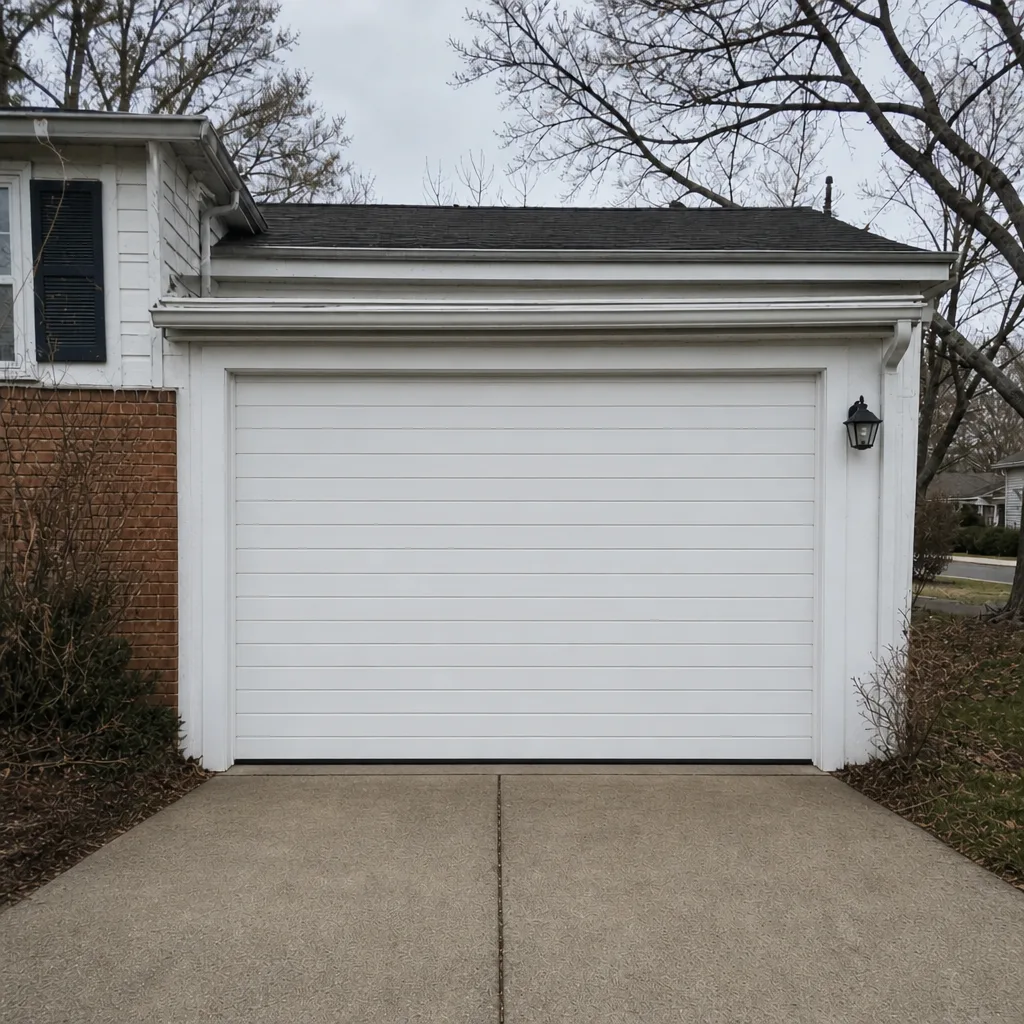
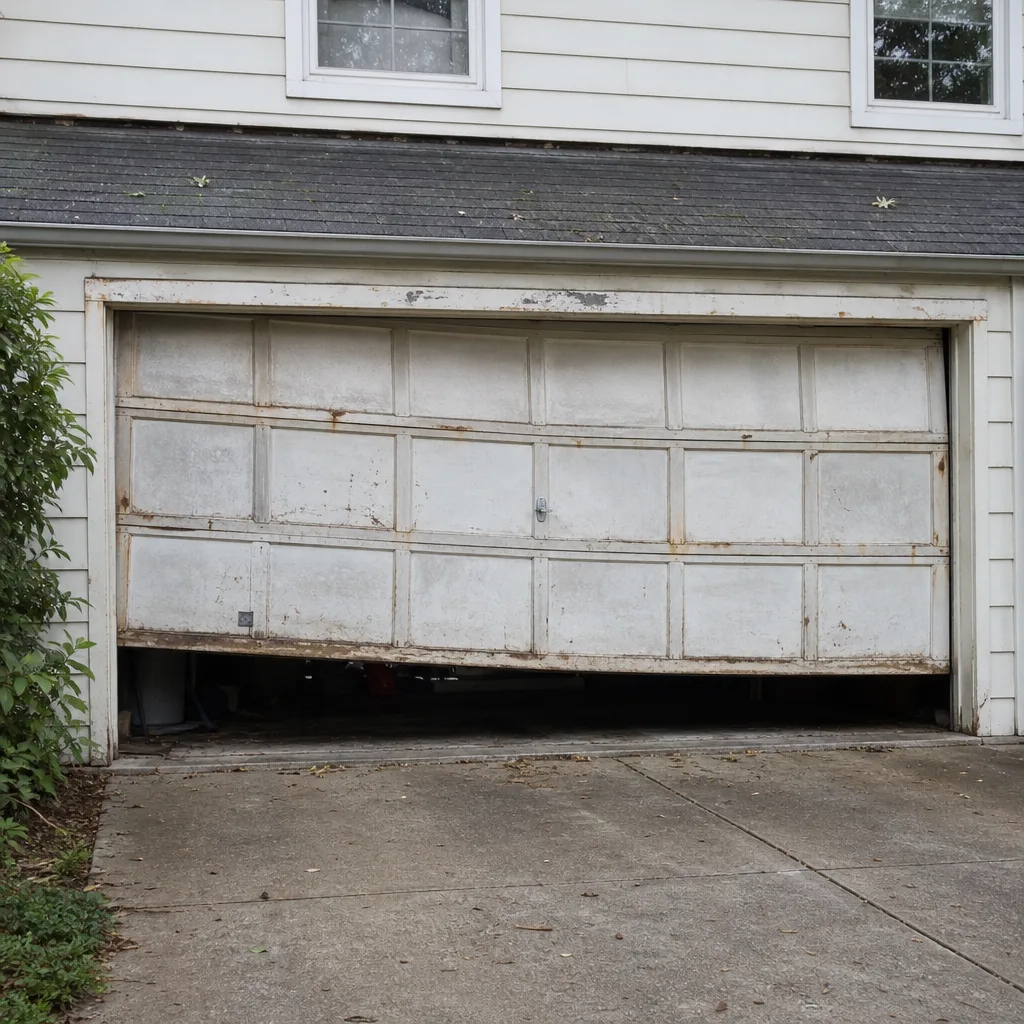
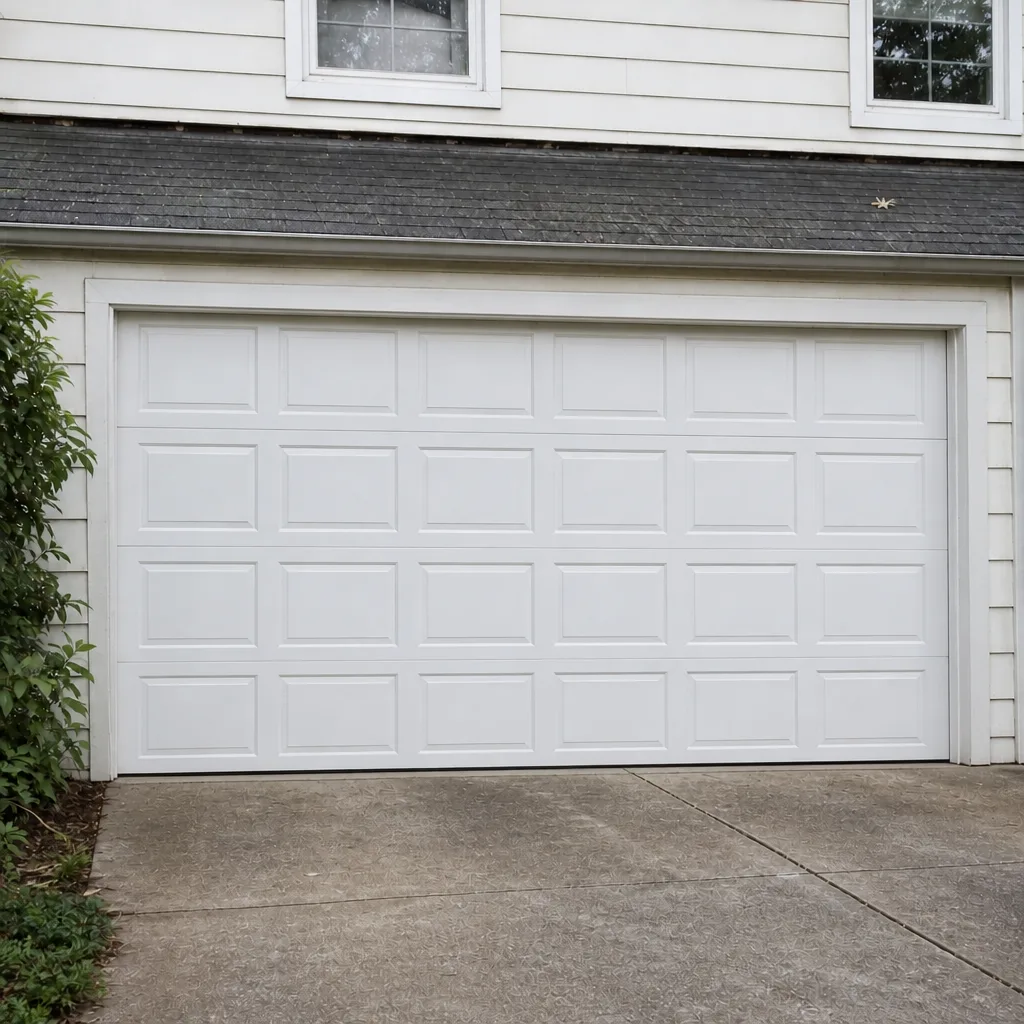
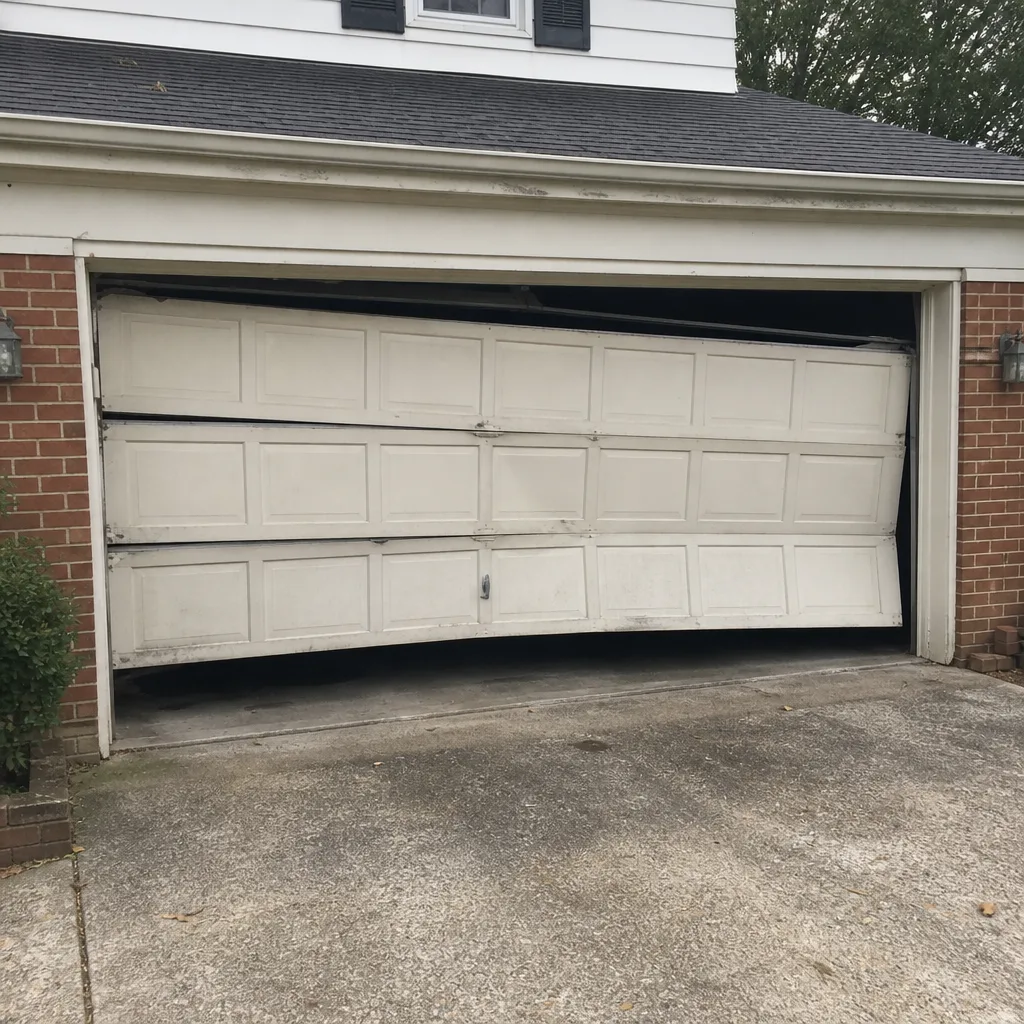
See the difference
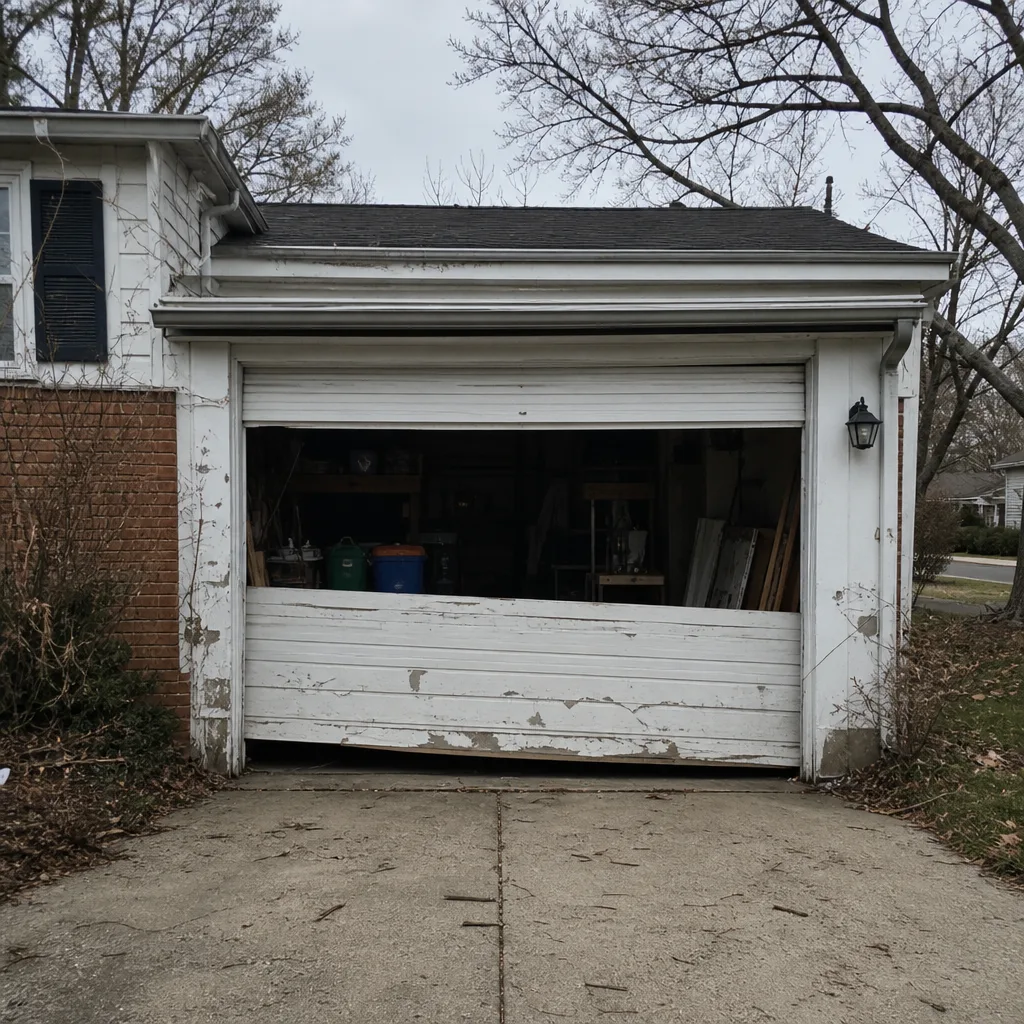 Before
 After
 Before
 After
 Before
 After
When to Call a Professional
Some failures are safe to handle yourself, and some aren’t. The dividing line is whether a spring or a cable is involved, whether the door is supported, and whether the failure happened while you weren’t looking. A frozen seal, a dead opener battery, or a manual release that needs re-engaging are homeowner tasks. A broken spring, a snapped cable, a door stuck open in a storm, a bent track, or a door that’s off its hinges are professional calls, and trying to fix them without proper tools can cause real injury or turn a repair into a replacement.
Bethesda Garage Door Repair Co offers free estimates in Bethesda – call (855) 550-7581. Our technicians have up to 12 years of experience, work across all eight of the major brands – LiftMaster, Chamberlain, Genie, Clopay, Amarr, Wayne Dalton, Craftsman, and Raynor – and handle emergency service for security- and safety-critical failures that can’t wait for a scheduled visit. If the door is stuck open, call now; if it’s a tired spring, schedule the repair before the next freeze. The written quote is agreed before any work starts, so you know the price before the technician picks up a tool.
Frequently Asked Questions
Use the manual release cord – pull it straight down, firmly and once, with the door in the closed position if possible, then lift the door by hand slowly. When power returns, re-engage the carriage by hand rather than pressing the opener button. If your opener has battery backup, you can use it for a short window before switching to manual.
Many modern LiftMaster and Chamberlain units include integrated battery backup that lifts the door a limited number of times during an outage. Older units and base-model openers usually don’t have it unless an add-on battery was installed. Check the model number on the opener head or the wall panel to confirm what you have.
Yes, safely, with heat and patience. Warm the seal with a hair dryer on low, work a plastic scraper under the rubber once it softens, then lift the door by hand with the manual release engaged. Don’t press the opener repeatedly – it strains the motor, and on an older unit it can strip the gear.
Don’t pull the manual release and don’t try to close the door by force. The springs support the door’s weight, and without them the door is unsupported and off-balance. Brace the door from the ground with sawhorses or wood, cover the open doorway from the outside, and call for emergency service. A broken spring or cable is a professional job.
For emergency failures – a door stuck open, a cable snapped, a spring broken – Bethesda Garage Door Repair Co provides emergency garage door service for these situations. For scheduled repair or replacement, a free estimate and a measured visit come next, with a written price before any work starts. Call (855) 550-7581 for an exact quote – estimates are free.
No, the written quote is the price for the work you agreed to. If the technician finds something genuinely different during the visit – a bent track that wasn’t visible from a photo, or a second spring about to fail – they’ll discuss it with you and get your agreement before doing anything beyond the original quote. Nothing gets added without your approval, and you can always ask for a fresh estimate on the new scope.
The Bottom Line
Garage door emergencies in Bethesda follow a pattern, and once you know the pattern you can prepare for it. The four failures worth planning around are a frozen seal, a power outage, a broken spring or cable, and a door stuck open in a storm. Each has a correct first response, and the wrong one costs money. Learn the manual release, check for battery backup before winter, brace a stuck-open door from the ground instead of reaching for a bungee, and save the number for the moment you need it. The rest is a seasonal routine that keeps the door working when the weather test arrives. Call (855) 550-7581 for a free estimate.
Written by the team at Bethesda Garage Door Repair Co.