Last updated November 23, 2026
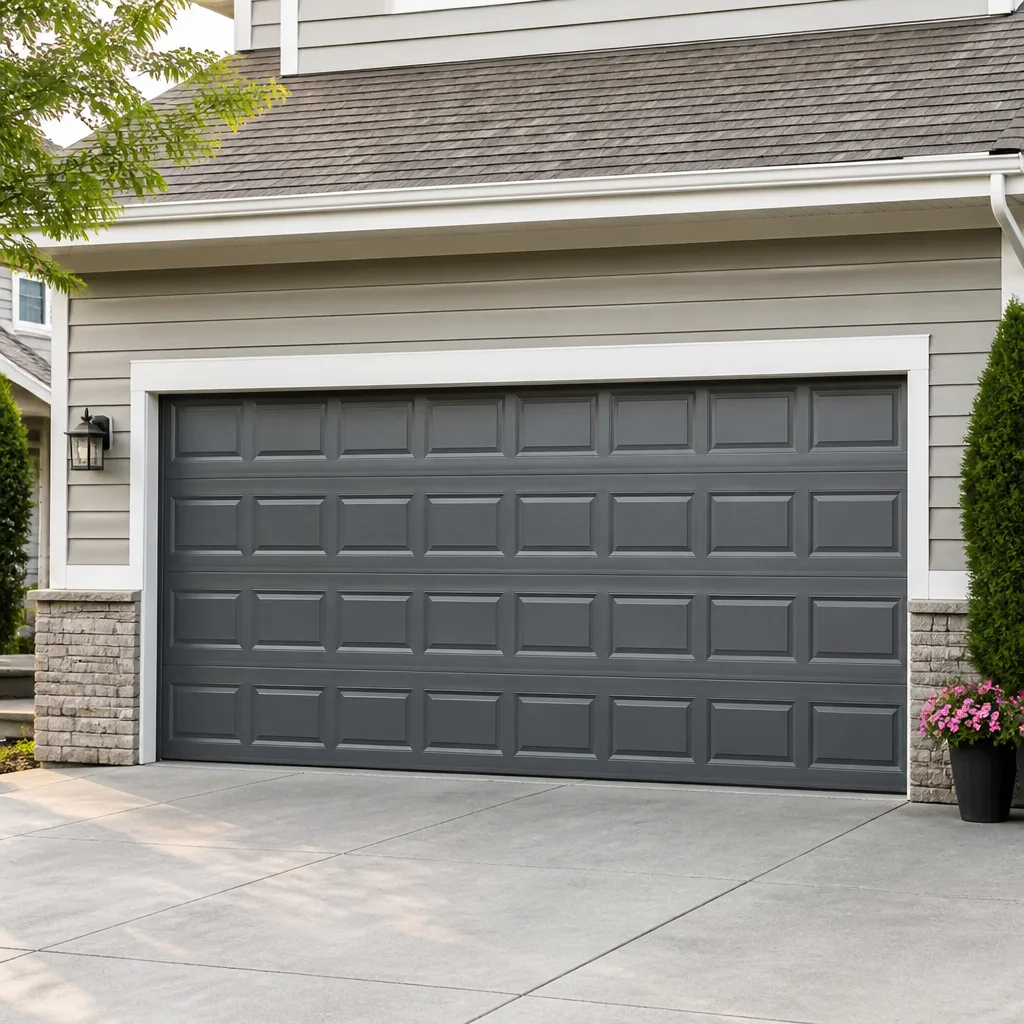 Raised-panel steel
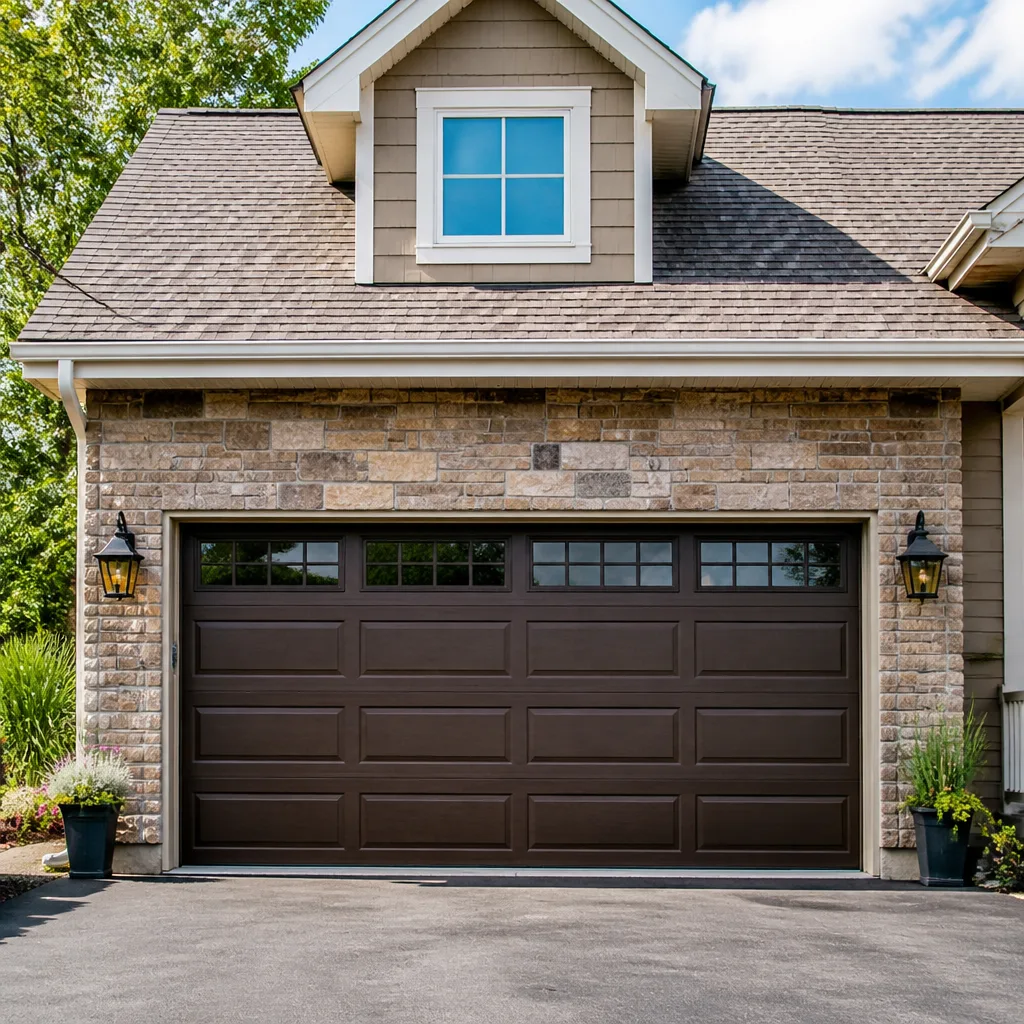
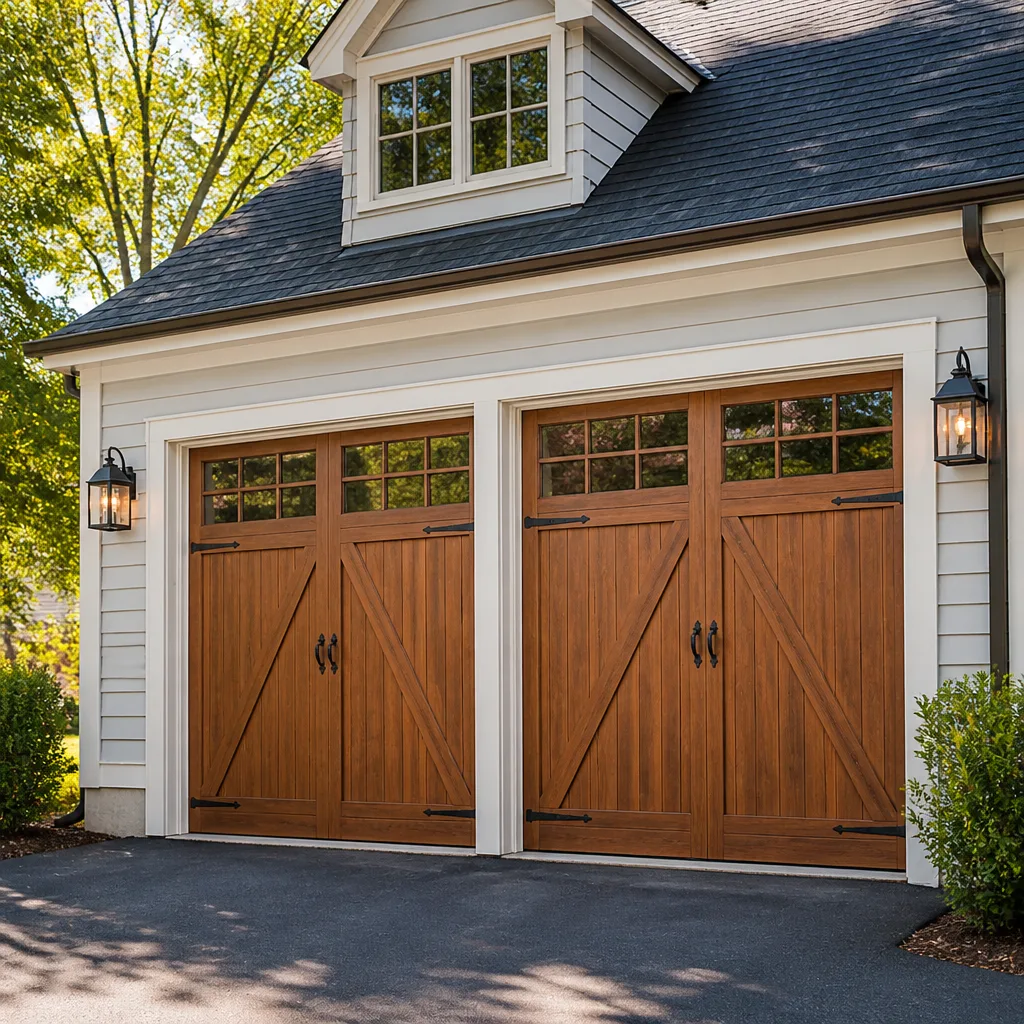 Carriage house
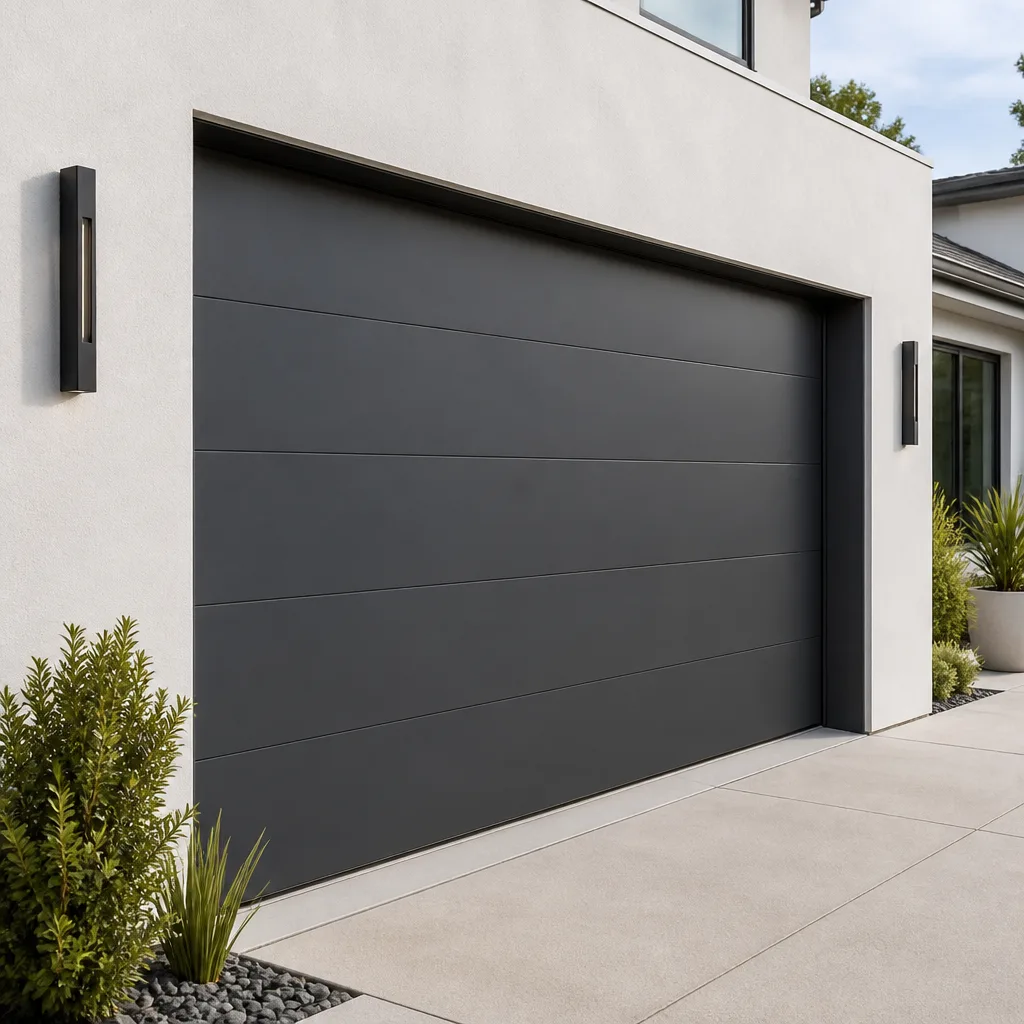 Modern flush
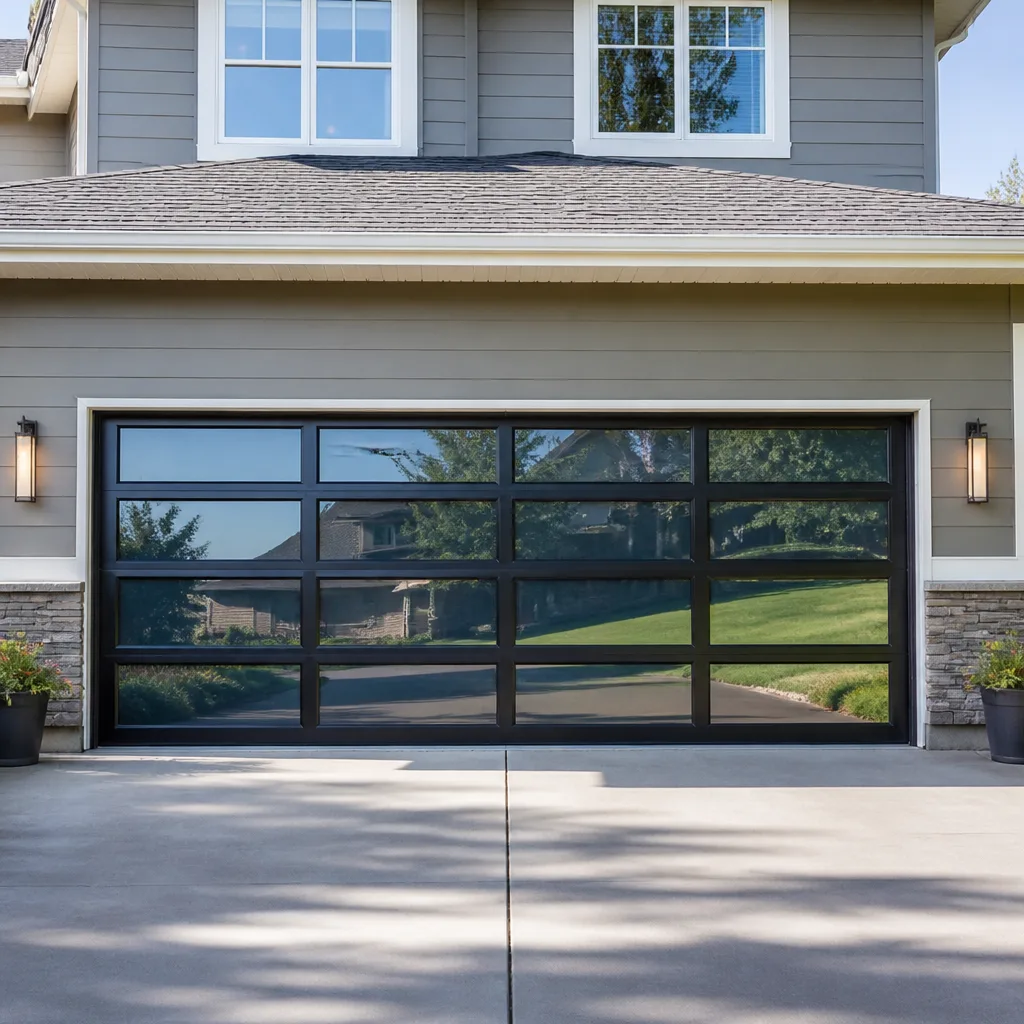 Full-view glass
 LiftMaster openers
 Chamberlain openers
Full 25-point door and opener safety check with every visit - springs, cables, rollers, tracks, and your LiftMaster or Chamberlain opener included
You get a price before we start. It does not change when the pro arrives.
Get your free estimateDIY vs Professional Garage Door: The Bethesda Homeowner’s Decision Guide
Most garage door advice online treats DIY as a skill test: if you’re handy enough, you do it yourself; if you’re not, you call someone. That framing misses the actual line. The real question isn’t whether you can turn a wrench. It’s whether the specific job in front of you stores enough energy, or carries enough liability, that a mistake has consequences beyond a stuck door. Torsion springs hold the entire weight of the door under tension, and the injury that most often happens is not during the repair itself but in the second the homeowner relaxes, believing the work is finished. In this guide we’ll draw a hard line between what a competent Bethesda homeowner can safely handle and what should never be attempted without training, and explain why each task falls where it does.
Quick Answer
In Bethesda, a homeowner can safely replace the bottom two rollers, swap weatherstrip, reprogram a remote, and tighten track bolts. Torsion spring replacement, cable replacement, and panel replacement involving the header should always go to a trained professional, no matter how confident you are. Everything else sits in between and depends on the door, the brand, and how the failure presents itself.
Styles & brands we work with
- Raised-panel steel
- Carriage house
- Modern flush
- Full-view glass
- LiftMaster openers
- Chamberlain openers
Table of Contents
- How a garage door system works, and why that matters for DIY decisions
- The tasks that are genuinely homeowner-safe
- The tasks that are categorically professional-only
- Torsion vs extension springs: different risks, different DIY rules
- Maryland MHIC licensing and why it signals more than credentials
- What DIY actually costs after tools, parts and redos
- Why brand matters: LiftMaster, Chamberlain, Genie, Clopay and Amarr
- Common mistakes to avoid
How a Garage Door System Works, and Why That Matters for DIY Decisions
A garage door is a balanced system. The door itself weighs a few hundred pounds on a typical two-car setup, and the springs exist to make that weight feel like almost nothing when you lift it by hand. Cables connect the springs to the door. Tracks keep the door travelling in a straight line. Rollers carry the weight along the tracks. The opener does the pushing and pulling, but it does not lift the door on its own.
That last point is where most homeowners go wrong. If the springs are tired or broken, the opener has been dragging a dead weight it was never designed to drag. The motor eventually fails, or the door drops the moment someone disconnects it. Understanding this balance is what separates a safe DIY repair from a dangerous one.
The four subsystems in a typical Bethesda garage
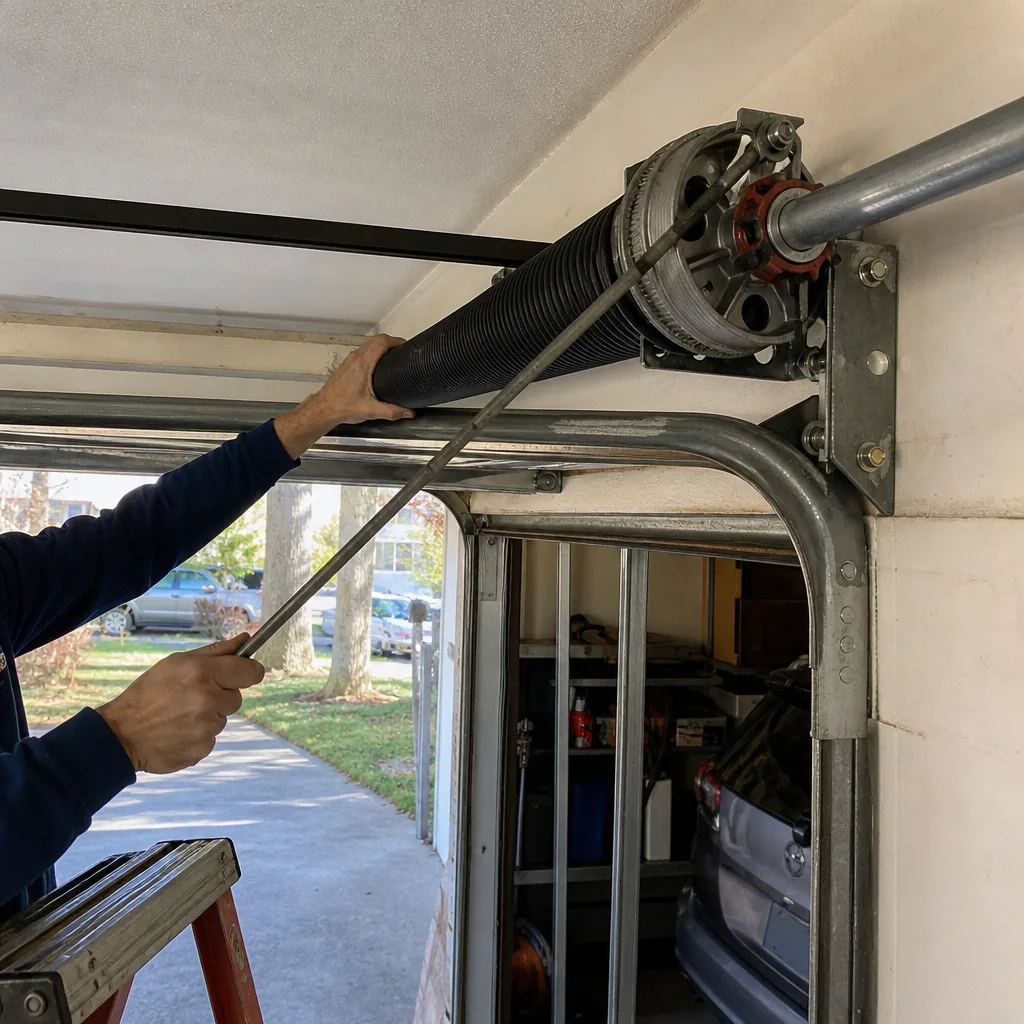
- Springs: store the lifting energy, either as torsion springs on a shaft above the door or extension springs along the horizontal tracks. This is the high-tension side of the system.
- Cables and drums: transfer spring energy to the door bottom brackets. Under load whenever the door is closed.
- Tracks and rollers: guide the door. The rollers are the only component you can safely swap in most cases.
- Opener and safety sensors: push and pull the door, and stop it from closing on anything. The opener is the electrical side, and it’s the side most homeowners understand least.
Why the balance changes the whole question
If the door is balanced, every task you do by hand is low-risk. If the balance is off, even tightening a track bolt can shift a component that was holding tension. Before you decide anything, do the balance check: disconnect the opener by pulling the release, lift the door halfway, and let go. A balanced door stays put. A door that drops or shoots back up has a spring problem, and the DIY conversation ends there. This is the simplest diagnostic in the trade and the one most homeowners skip.
If the door isn’t balanced, don’t attempt to adjust anything. Call garage door spring repair and let a technician handle it. We see this every week in Bethesda: a homeowner who thought the opener was failing when the springs had quietly stopped carrying their share of the weight.
The Tasks That Are Genuinely Homeowner-Safe
Four tasks are safe for a careful homeowner. They share a trait: none of them involve stored spring tension, and none of them require you to be under a load-bearing part of the door. If a task you’re considering isn’t on this list, treat it as professional-only until a technician tells you otherwise.
1. Bottom roller replacement
The bottom two rollers are the ones that wear fastest, because they carry the most weight and travel through the tightest curve of the track. Replacing them is a straightforward job with a door in the up position:
- Raise the door fully and disconnect the opener.
- Clamp a pair of locking pliers on the track above the bottom roller so the door can’t roll back down.
- Remove the roller bracket with a socket or wrench, swap the roller, and reinstall.
- Repeat on the other side, then lower the door slowly and test.
Do not attempt the upper rollers or the rollers attached to the torsion spring brackets. Those sit inside the tension zone.
2. Weatherstrip replacement
The bottom seal, side jambs and top seal are all homeowner-safe. The bottom seal usually slides out of a track on the door’s bottom edge. Side and top weatherstrip is often nailed or stapled to the jamb. Neither task involves tension, and both dramatically reduce drafts in a Bethesda winter, which matters given how often garages here sit attached to living space above.
3. Remote reprogramming
Chamberlain and LiftMaster remotes reprogram the same way: press the learn button on the motor head until the LED lights, then press and hold the remote button within about 30 seconds. Genie systems use slightly different sequencing, so check the manual for your model. This is one of the most common calls we get, and it’s almost always something a homeowner can handle. If it isn’t, garage door opener repair covers the underlying issue.
4. Track bolt tightening
If a track is rattling but the door is running smoothly, the lag bolts have probably loosened. Snug them with a socket, don’t overtighten, and stop immediately if the track looks bent or the door starts to bind. A bent track is a professional job.
The Tasks That Are Categorically Professional-Only
Three categories of work should never be attempted by a homeowner, regardless of experience or YouTube confidence. The risk isn’t proportional to skill. It’s mechanical, and it’s there whether you’ve done it before or not.
Torsion spring replacement
Torsion springs are wound to a specific number of turns and hold that energy at all times. Releasing that energy incorrectly can break a wrist or take out an eye. The dangerous moment isn’t during the repair – it’s the moment after, when the homeowner stands up, believes they’re done, and lets attention slip. The winder bar can kick back hard enough to break bones. There is no safe home method for winding a torsion spring, and we say that to every homeowner who calls asking whether they can try.
Cable replacement
Cables carry the same spring load. If a cable snaps while you’re working near it, it whips with enough force to cut through clothing. Cables are also under load whenever the door is closed, so the danger is present even when the door looks “off.” Never touch a cable that looks frayed. Photograph it and call.
Panel replacement involving the header
Replacing a middle panel is sometimes a homeowner DIY job. Replacing a bottom or top panel, or any panel where the door’s structural header is involved, is not. The header carries the door’s weight and the track’s alignment. If a Bethesda home has a sagging header or water damage behind the jamb, the panel replacement becomes structural work, and that means permits, which brings us to the next section.
Torsion vs Extension Springs: Different Risks, Different DIY Rules
Bethesda has a lot of homes from the 1950s through the 1990s with extension spring systems on single-car and two-car doors. These look easier to work on than torsion springs and are often treated as DIY-friendly. They aren’t. Extension springs store less energy per spring than torsion springs, but they fail differently, and that failure mode is what makes them risky.
Extension springs: the hidden snap risk
When an extension spring breaks, it recoils along the track. Without a containment cable running through the center of the spring, it can travel far enough to damage a car or hit a person standing nearby. Older Bethesda homes frequently have extension springs installed without containment cables, which was standard practice at the time. If your springs look open, with no steel cable through the middle, treat them as a safety issue and have them looked at. A technician can add containment cables along with a proper spring replacement.
Torsion springs: concentrated energy
Torsion springs fail with a single loud bang and the door drops partway. Because the spring is on a shaft above the door, a failure typically doesn’t send metal flying, but the sudden drop is a serious risk if anyone is under the door. The install itself carries more stored energy than extension springs, which is why torsion spring work is the one job we insist no homeowner try at any skill level.
Why this matters for your DIY decision
If you have extension springs, don’t assume “easier” means “safe to replace.” The containment cable is the difference between a broken spring and a broken window. Have a technician inspect them; if you want a full replacement, that’s garage door spring repair handled by someone trained on the specific system in your garage.
Maryland MHIC Licensing and Why It Signals More Than Credentials
Maryland requires home improvement contractors to be licensed through the Maryland Home Improvement Commission (MHIC). That’s a fact worth knowing as a homeowner, because it tells you two things. First, the contractor has passed the state’s requirements to operate legally. Second, the work is backed by the state’s guarantee fund in the event of a problem.
What the license signals for the homeowner
When a job carries MHIC licensing, the liability sits with the licensed professional, not with you. That distinction matters for the three jobs we listed as professional-only. If a torsion spring fails after installation and something goes wrong, a licensed contractor is on the hook. If you install it yourself, you are. A snapped cable that damages a car in the driveway? Same story. Homeowner’s insurance often excludes DIY work that wasn’t permitted or licensed, which is a conversation to have with your insurer before you decide.
How to confirm a contractor
Maryland publishes a public license lookup through the MHIC. Ask for the license number and check it. A contractor who hesitates on that question isn’t the contractor for the job. This applies to any garage door work you’re considering outsourcing, not just spring repair.
What about permits?
Most garage door replacements in Bethesda don’t require a building permit because they’re replacing a component, not changing structure. Structural header work does. If the work involves reframing, adding a beam, or changing door opening size, ask the city’s building department what permits apply. Don’t rely on the contractor to volunteer it; a good one will, but the homeowner is ultimately responsible for the permit being on record.
If you’re ready to have a licensed local pro look at your door, that’s what we connect you with. Bethesda Garage Door Repair Co works with vetted local professionals who carry state licensing and insurance as required, and the written quote they give you is the price you pay.
What DIY Actually Costs After Tools, Parts and Redos
DIY feels free because the labor isn’t billed. That accounting misses three costs: tool rental, parts markup at retail, and the redo. Add all three honestly and DIY saves far less than most homeowners expect, and on the jobs where a redo is likely, it can cost more than calling a technician.
The real DIY math
- Tools: A winding bar set for torsion springs costs a real amount on its own, and that’s before the risk of using them wrong. Most homeowners never use them again.
- Parts markup: Retail springs and cables cost more than what a licensed contractor pays at trade pricing. That margin eats into the savings.
- Redo cost: If the first attempt fails, you buy the parts a second time and possibly the tool rental again. On spring or cable work, the redo is when most injuries happen, because the homeowner relaxes after “finishing” the first attempt.
Typical Bethesda price ranges
These are typical estimates for the jobs a homeowner is most likely to consider. The written estimate sets the final price.
| Job | Typical estimate |
|---|---|
| One torsion spring replacement | $180 to $340 |
| Two torsion springs (matched pair, usually replaced together) | about twice the single-spring figure |
| Extension spring replacement, per spring | $180 to $340 |
| Bottom roller replacement (two rollers) | Small, often bundled with a service visit |
| Weatherstrip replacement (bottom seal) | Small, often bundled with a service visit |
| New door installation | Quoted per door after a measurement visit |
When you compare that against what retail parts and tool rental actually cost, the DIY savings on spring work usually come out smaller than expected. On weatherstrip and roller swaps, DIY is a real saving, because the parts are inexpensive and there are no special tools involved.
Why Brand Matters: LiftMaster, Chamberlain, Genie, Clopay and Amarr
One of the first calls we take from a homeowner trying to DIY an opener issue is that they can’t match their remote to a new one. The issue isn’t skill, it’s the brand. Modern LiftMaster and Chamberlain systems use rolling codes and learn buttons; older Genie units use different frequency bands and dip switches. Matching the wrong remote to the wrong motor doesn’t work, and no amount of YouTube clears that up.
Opener brands on the motor head
LiftMaster and Chamberlain are the most common openers we see in Bethesda garages, and they share myQ smart-home integration in the newer models. Genie is common in older homes and uses a slightly different remote programming process. Craftsman openers are widely installed on doors from the 1990s. Recognizing the brand before you touch anything saves a lot of frustration, and it’s why we handle garage door opener repair across all of these.
Door brands on the panel
Clopay and Amarr make most of the residential steel doors installed in this area. If you’re replacing a bottom panel, the brand on the door determines whether a replacement panel is even available without replacing the whole door. A Wayne Dalton or Raynor door may use a panel profile that’s no longer in current production, which is a conversation to have before you order a part. Skilled technicians here work with all of these and know which parts still exist.
What to do if you’re not sure of the brand
Photograph the motor head and the door’s panel edges. The motor head has a sticker with the model number on almost every unit. The panel usually has a stamp on the inside. Send both photos and any reputable professional can tell you immediately what you’re dealing with.
Common Mistakes to Avoid
- Attempting spring work because a video made it look simple. Videos edit out the two minutes where the winder bar slips. That’s the two minutes that cause hospital visits.
- Treating older extension springs as DIY-friendly. Many Bethesda homes have springs without containment cables. A spring that breaks on a system like that can send metal down the track at head height.
- Disconnecting the opener while the door is partly open. The door will freefall if the springs aren’t doing their job. Always open the door fully before pulling the release.
- Buying a replacement remote without checking the motor brand first. LiftMaster, Chamberlain and Genie don’t share remote protocols. Matching wrong costs a return trip.
- Overtightening track bolts. Snug is enough. Over-tightening bows the track, and a bowed track chews through rollers in weeks.
- Replacing a bottom panel on a door with a rusted or sagging header. If the header is moving, the panel replacement doesn’t fix anything and can create a bigger problem.
- Assuming homeowner’s insurance covers DIY failures. Many policies exclude unpermitted or unlicensed structural and mechanical work. Ask your insurer before you start.
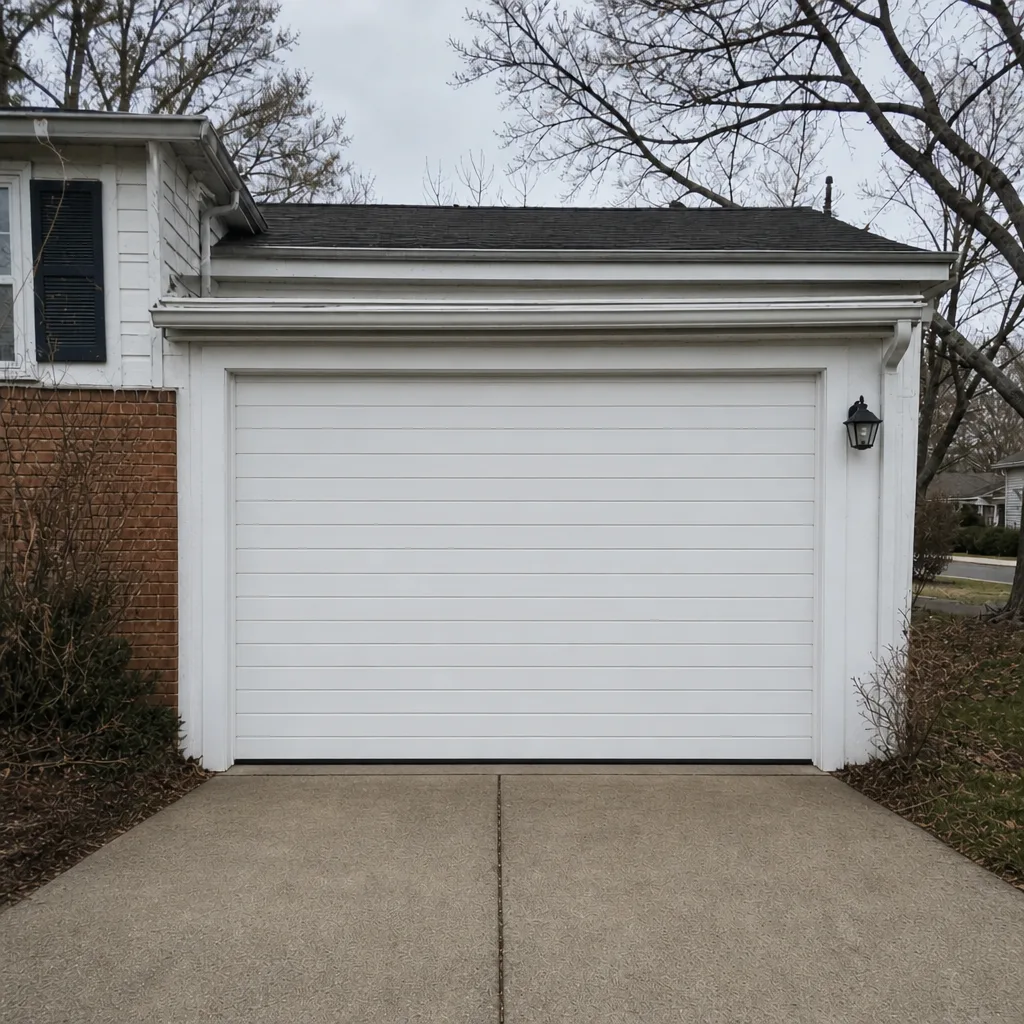
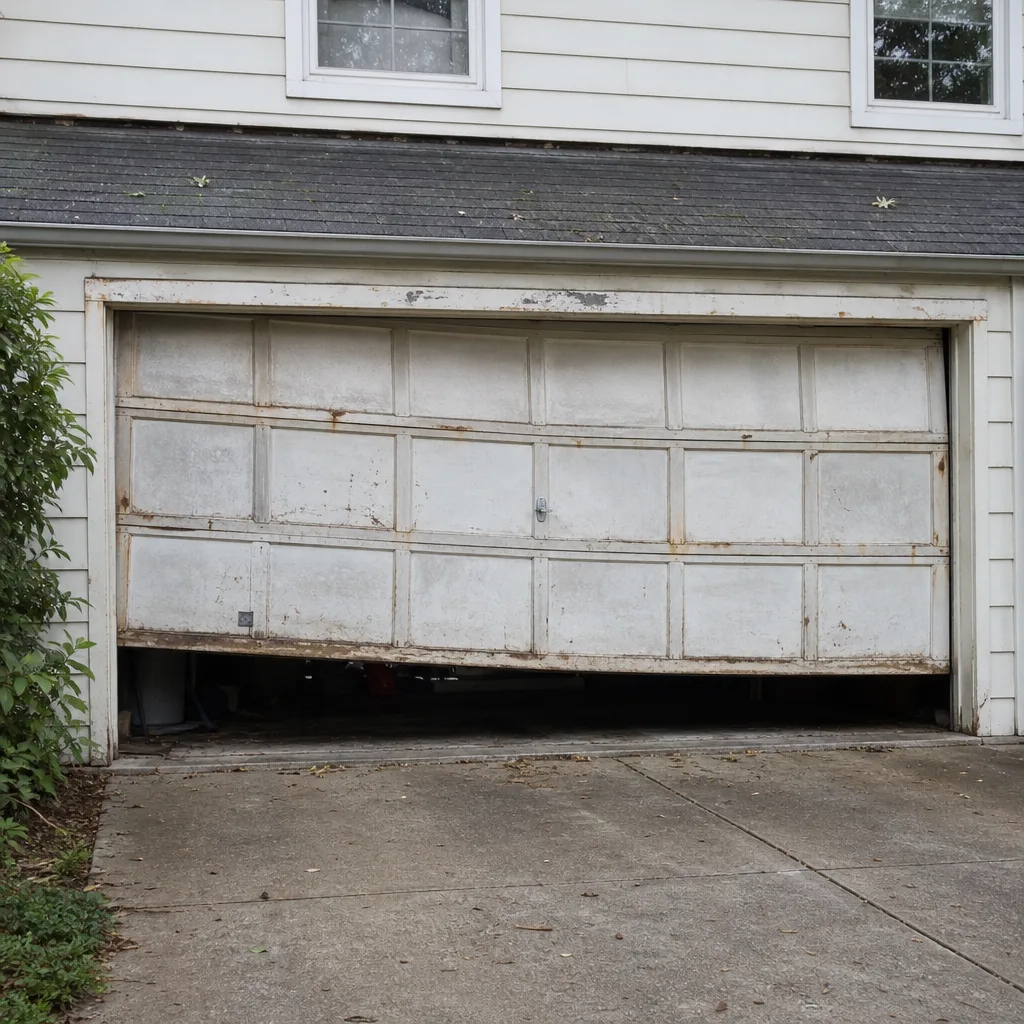
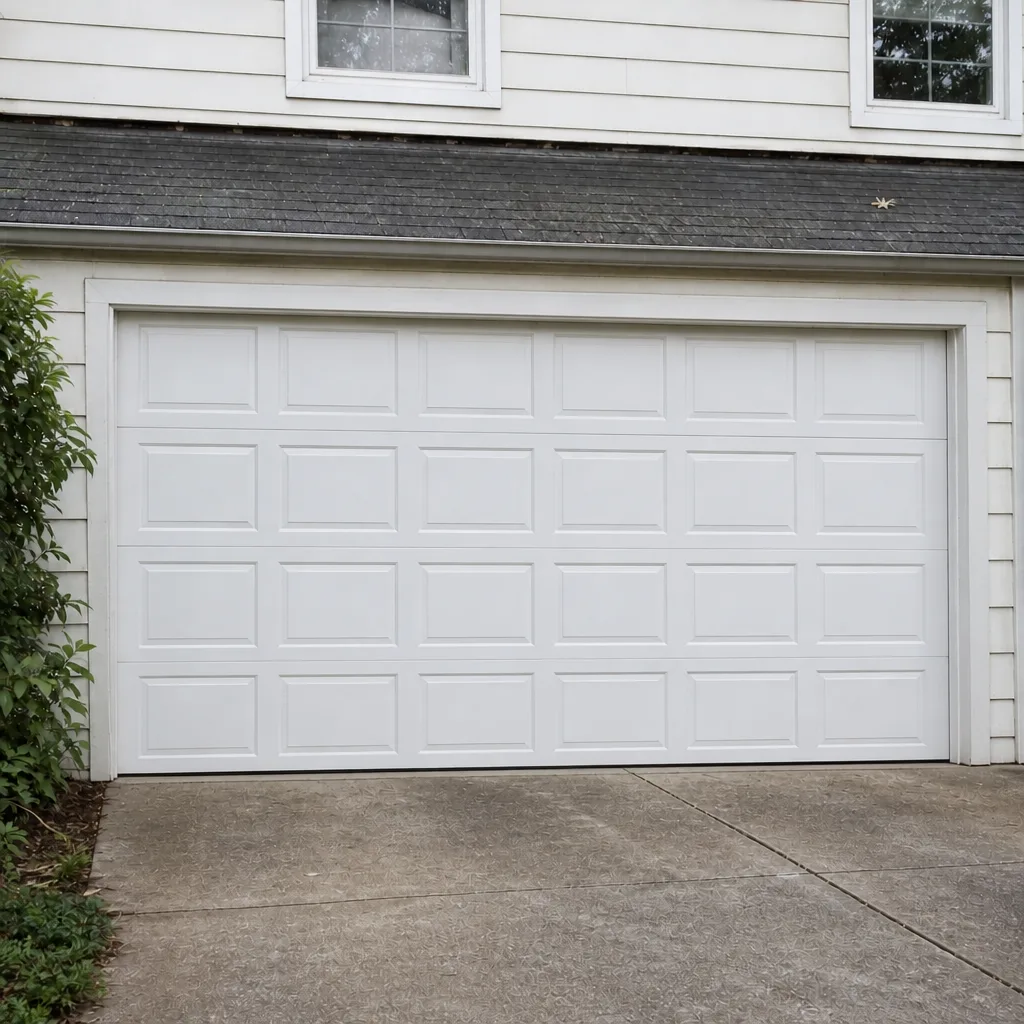
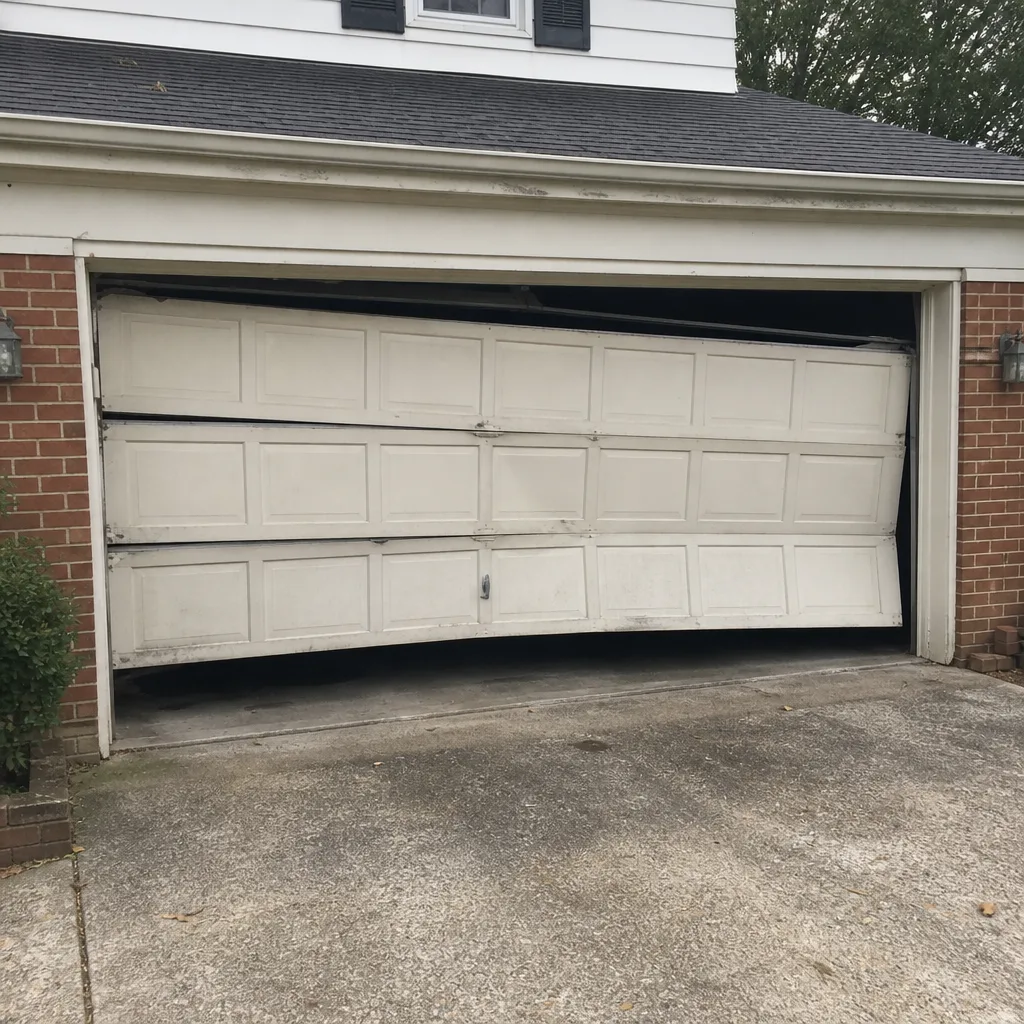
See the difference
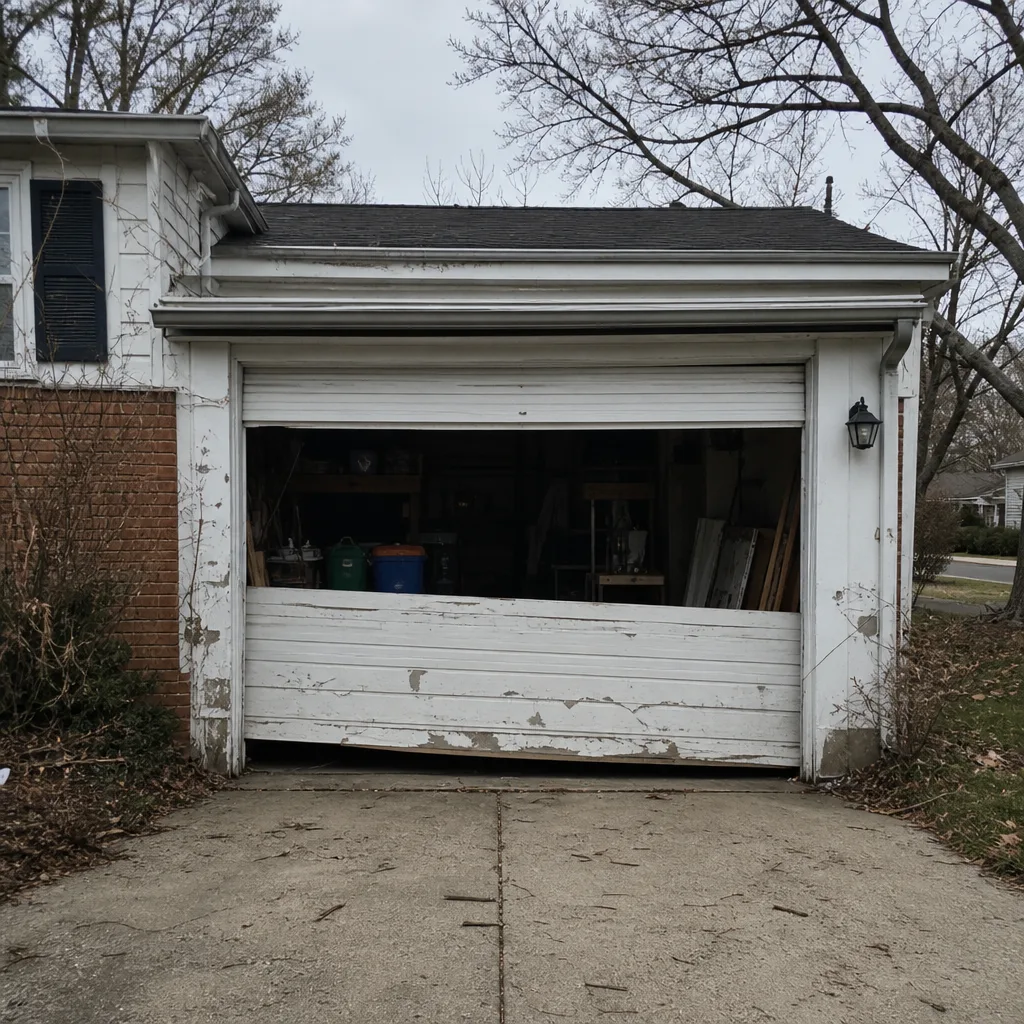 Before
 After
 Before
 After
 Before
 After
When to Call a Professional
Call a professional when the task involves springs, cables, structural headers, or a door that has lost its balance. Call when you can’t identify the brand on the opener or door and the repair depends on it. Call when an older extension spring system shows no containment cable. Call when the door won’t open and the car is inside, or when the door is stuck open and the house is exposed – these are urgent, and our emergency service covers them. And call when you’ve started a “simple” repair and discovered it isn’t. We’ve all seen a homeowner free a stuck roller and then find the spring behind it fractured. Better to stop and let a technician finish. Bethesda Garage Door Repair Co offers free estimates in Bethesda – call (855) 550-7581 for a written price before any work begins.
Frequently Asked Questions
No. Torsion spring replacement is not safe for a homeowner at any skill level, because the spring stores enough energy to break a wrist or worse if it releases incorrectly. Extension spring replacement carries a different risk – a snapped spring can travel down the track – and older Bethesda homes often have extension springs without containment cables, which raises the danger. Call a trained professional for any spring work. Call (855) 550-7581 if you’d like an estimate; it’s free.
A typical estimate is $180 to $340 for one spring. Most doors use a matched pair of springs that are replaced together, so a pair costs about twice that. The written quote you receive is the price you’ll pay, and the price is agreed before any work starts. Call (855) 550-7581 for an exact quote; estimates are free.
Replacing the whole opener is a professional job, because the opener, springs, cables and door weight all interact safety-wise. Reprogramming a remote or replacing a battery is fine to do yourself, and that’s honestly the fix for most opener “problems” we hear about. If the motor runs but the door doesn’t move, or the safety sensors won’t realign, call. Call (855) 550-7581 and we’ll walk you through what to check.
We connect you with professionals trained on eight of the most widely installed brands – LiftMaster, Chamberlain, Genie, Clopay, Amarr, Wayne Dalton, Craftsman and Raynor – so if it’s in your garage, we know. That includes older Craftsman units and newer LiftMaster and Chamberlain openers with smart-home integration. Call (855) 550-7581 to confirm whether your specific model is covered.
No, provided you received a written estimate before work started. The quote is based on what the technician sees at the visit, and that written figure is the price. If the scope genuinely changes – a second spring turns out to be fractured, or a cable is frayed – the technician will re-quote before any additional work begins, and you decide whether to proceed. Call (855) 550-7581 for a free estimate first.
Yes for urgent failures – a door stuck open is a security issue, and a door stuck closed traps your vehicle. Emergency service is available for these cases. Same-day response depends on the failure and the schedule. Call (855) 550-7581 and we’ll book you the earliest available appointment, and if a temporary fix is possible we’ll talk it through.
The Bottom Line
The DIY-versus-professional question has a clear answer once you split it by task. Weatherstrip, bottom rollers, remote reprogramming and track bolt tightening are homeowner-safe and genuinely save money. Torsion springs, cables and any header work are categorically professional-only, no matter how confident you are, because the injury risk sits in the mechanism and not in your skill level. The most dangerous moment isn’t the repair itself – it’s the minute after, when a homeowner relaxes. Our technicians have up to 12 years of experience across eight brands, and we connect you with local professionals who carry state licensing and insurance. If the job on your list falls on the professional-only side, that’s not a failure of DIY spirit. It’s a call worth making.
Ready to have your door looked at? Call (855) 550-7581 for a free estimate in Bethesda and the surrounding neighborhoods. We’ll give you a written price before any work starts, and we’ll work with whatever brand is in your garage.
Written by the team at Bethesda Garage Door Repair Co.